Automated Debt Collection: Complete 2026 Guide To AI-Powered Recovery Solutions

Introduction to Automated Debt Collection
As consumer delinquency continues to rise, with delinquency rates hitting 4.8%, the highest since 2017, debt collection agencies and accounts receivable departments face mounting pressure to recover funds efficiently while maintaining strict regulatory compliance. Traditional call center models are struggling with high operational costs, agent attrition, and inconsistent recovery rates, creating an urgent need for innovation in the collections industry.
Automated debt collection represents a transformative approach that leverages artificial intelligence, machine learning, and omnichannel communication to streamline recovery processes. For Directors of Operations, Collections Managers, and CFOs tasked with maximizing recovery rates while minimizing costs, understanding the landscape of automated debt collection solutions has become essential for competitive advantage in 2026.
This comprehensive guide explores how AI-powered debt collection systems are reshaping the industry, the regulatory considerations you must address, implementation strategies, and measurable ROI metrics that matter to decision-makers.
What Is Automated Debt Collection?
Automated debt collection refers to the use of technology particularly artificial intelligence, natural language processing, and automated communication systems to manage and execute the debt recovery process with minimal human intervention. Unlike traditional methods that rely heavily on human agents making repetitive calls, automated debt collection platforms can initiate contact, engage in conversations, negotiate payment arrangements, and process transactions across multiple channels simultaneously.
Modern automated systems incorporate several key components:
- AI-Driven Decisioning: Machine learning algorithms analyze debtor data, payment history, and behavioral patterns to determine optimal contact strategies, timing, and communication channels.
- Multi-Channel Outreach: Automated systems engage debtors through voice calls, SMS, email, and digital portals, meeting consumers where they prefer to communicate.
- Conversational AI: Advanced natural language processing enables systems to conduct human-like conversations, understand intent, handle objections, and provide personalized responses.
- Compliance Automation: Built-in regulatory guardrails ensure adherence to the Fair Debt Collection Practices Act (FDCPA), Telephone Consumer Protection Act (TCPA), and other applicable regulations.
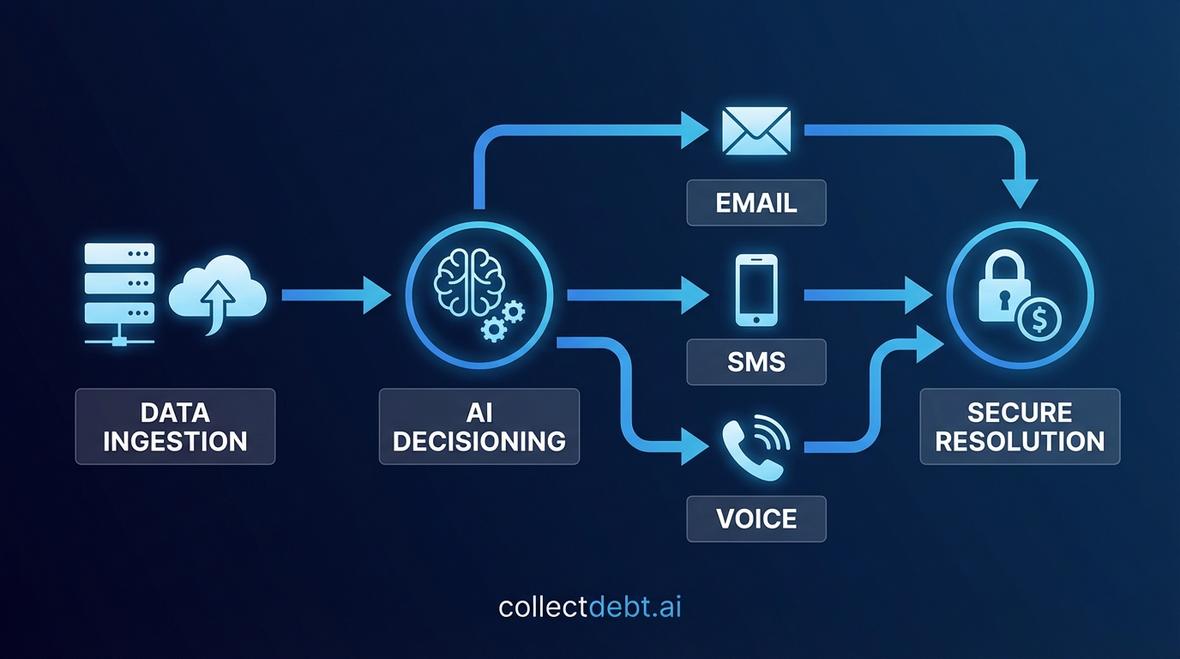
Traditional vs. Automated Debt Collection
The differences between traditional and automated debt collection extend far beyond simple technology adoption. Traditional call centers face significant challenges including high employee turnover, inconsistent messaging, limited scalability, and difficulty maintaining compliance across thousands of interactions daily.
Automated debt collection platforms address these pain points by providing:
- 24/7 availability without staffing constraints
- Consistent, compliant messaging across all interactions
- Instant scalability to handle volume fluctuations
- Data-driven optimization based on real-time performance metrics
- Lower cost-per-contact compared to human agents
According to Forrester research on AI-driven collections trends, organizations implementing AI-powered collections solutions have experienced significant reductions in manual labor hours while simultaneously improving payment adherence rates.
Key Benefits of Automated Debt Collection for Agencies
For decision-makers evaluating automated debt collection solutions, understanding the tangible benefits is crucial for building a business case and securing stakeholder buy-in.
Operational Efficiency and Cost Reduction
The most immediate benefit of automated debt collection is the dramatic reduction in operational costs. Traditional call centers incur substantial expenses related to agent salaries, training, benefits, infrastructure, and management oversight. The Bureau of Labor Statistics reports high attrition rates in call center roles due to the repetitive nature of collections work, further increasing recruitment and training costs.
Automated systems eliminate many of these expenses by handling routine collection activities without human intervention. Organizations typically see 40-60% reductions in cost-per-contact when transitioning from traditional to automated approaches. Additionally, end-to-end collection automation reduces administrative overhead by streamlining data management, reporting, and workflow coordination.
Improved Recovery Rates Through Personalization
Contrary to the assumption that automation reduces effectiveness, properly implemented automated debt collection systems often outperform human agents in recovery rates. AI-driven platforms analyze vast amounts of data to personalize each interaction based on debtor characteristics, communication preferences, payment history, and behavioral indicators.
This data-driven approach enables:
- Optimal Contact Timing: Systems identify when individual debtors are most likely to engage and respond positively
- Channel Preference Matching:Omnichannel support ensures communication occurs through the debtor's preferred medium
- Personalized Messaging: AI tailors conversation scripts and payment options based on individual circumstances
- Behavioral Segmentation: Machine learning identifies debtor segments and applies proven strategies for each group
Compliance and Risk Mitigation
Regulatory compliance represents one of the most significant challenges in debt collection. Violations of the FDCPA, TCPA, and state-specific regulations can result in substantial fines, legal action, and reputational damage. Human error in collections conversations whether through improper disclosures, prohibited contact times, or harassment creates ongoing liability.
Automated debt collection platforms provide built-in compliance safeguards that dramatically reduce regulatory risk:
- Automated call time restrictions based on debtor time zones
- Consistent delivery of required disclosures and mini-Miranda warnings
- Automatic cessation of contact upon request
- Complete interaction logging for audit trails
- Real-time monitoring for prohibited language or practices
For organizations concerned about regulatory compliance in automated systems, resources like the FDCPA compliance guide for AI debt collection provide detailed frameworks for implementing compliant automation.
Scalability and Flexibility
Traditional collection operations struggle to scale efficiently. Adding capacity requires recruiting, hiring, training, and managing additional staff a process that takes weeks or months. Seasonal fluctuations or sudden increases in delinquency create operational challenges that are difficult to address quickly.
Automated debt collection systems scale instantly to accommodate volume changes. Whether handling 1,000 or 100,000 accounts, the technology infrastructure adjusts without the delays and costs associated with staffing changes. This scalability is particularly valuable for:
- Organizations with seasonal business cycles
- Agencies taking on new client portfolios
- Enterprises experiencing rapid growth
- Businesses responding to economic fluctuations affecting delinquency rates
Core Features of Automated Debt Collection Systems
Understanding the essential capabilities of modern automated debt collection platforms helps decision-makers evaluate solutions and identify the features most critical for their specific needs.
Conversational AI and Voice Technology
Advanced conversational AI enables automated systems to conduct natural, productive conversations with debtors. Unlike rigid IVR systems that frustrate consumers with limited menu options, modern voice AI understands natural language, responds contextually, and handles complex interactions including objections, questions, and negotiation.
Key capabilities include:
- Natural language understanding that interprets debtor intent
- Dynamic conversation flows that adapt based on responses
- Emotion detection to identify frustration or distress
- Seamless escalation to human agents when appropriate
- Multi-language support for diverse debtor populations
Right Party Contact and Verification
Contacting the correct individual is fundamental to effective collections and regulatory compliance. Right party verification technology uses voice biometrics, knowledge-based authentication, and data matching to confirm debtor identity before discussing account details.
This capability prevents:
- Disclosure of debt information to unauthorized parties
- Wasted contact attempts on wrong numbers
- Compliance violations related to third-party disclosure
- Inefficient use of resources on unproductive contacts
Self-Service Debt Resolution
Consumers increasingly prefer self-service options that provide control and convenience. Self-service debt resolution portals integrated with automated collection systems enable debtors to:
- View account balances and payment history
- Set up payment arrangements without agent involvement
- Make immediate payments through secure interfaces
- Request account documentation
- Communicate preferences for future contact
Self-service reduces operational costs while improving debtor satisfaction and payment adherence.
Promise-to-Pay Management
Securing payment commitments and ensuring follow-through represents a critical collection function. Promise-to-pay features in automated systems capture debtor commitments, schedule follow-up communications, send payment reminders, and automatically escalate broken promises according to predefined strategies.
Analytics and Post-Call Analysis
Data-driven optimization distinguishes high-performing collection operations from average ones. Post-call analysis capabilities provide detailed insights into:
- Conversation outcomes and debtor responses
- Agent (or AI) performance metrics
- Compliance adherence across interactions
- Payment commitment fulfillment rates
- Channel effectiveness and ROI
These analytics enable continuous refinement of collection strategies, messaging, and contact approaches based on empirical evidence rather than assumptions.
Implementation Considerations for Automated Debt Collection
Successfully deploying automated debt collection technology requires careful planning, stakeholder alignment, and attention to both technical and operational factors.
Integration with Existing Systems
Automated collection platforms must integrate seamlessly with your existing technology ecosystem, including collection management systems, CRMs, payment processors, and data warehouses. Robust integration capabilities ensure data flows smoothly between systems without manual intervention or data silos.
Key integration considerations include:
- API availability and documentation quality
- Support for your specific collection management platform
- Real-time data synchronization capabilities
- Webhook support for event-driven workflows
- Data security and encryption standards
Data Quality and Preparation
The effectiveness of AI-driven collection systems depends heavily on data quality. Before implementation, organizations should audit and clean their debtor data, ensuring accuracy in contact information, account balances, payment history, and demographic details. Poor data quality undermines personalization capabilities and wastes contact attempts on incorrect information.
Compliance Framework Development
While automated systems provide compliance safeguards, organizations must establish clear policies and procedures governing their use. This includes defining:
- Permissible contact times and frequencies
- Required disclosures and mini-Miranda language
- Escalation protocols for disputes or complaints
- Data retention and privacy policies
- Quality assurance and monitoring procedures
Resources like the Fair Debt Collection Practices Act guide can help organizations develop comprehensive compliance frameworks.
Change Management and Staff Training
Transitioning to automated debt collection affects existing staff, workflows, and organizational culture. Successful implementations address the human side of technology adoption through:
- Clear communication about automation's role and benefits
- Redefining agent roles to focus on complex cases and exceptions
- Training staff on new systems and processes
- Involving team members in pilot testing and feedback
- Celebrating early wins and sharing success metrics
Industry-Specific Applications of Automated Debt Collection
Different industries face unique collection challenges that automated systems address through specialized capabilities and configurations.
Financial Services
Banks, credit unions, and lending institutions manage diverse portfolios including credit cards, personal loans, mortgages, and auto loans. Financial service collection solutions provide segment-specific strategies, regulatory compliance for consumer lending, and integration with core banking systems.
Healthcare
Healthcare providers face distinctive collection challenges including patient sensitivity, complex billing scenarios, and insurance coordination. Healthcare collection automation addresses these through empathetic communication scripts, payment plan flexibility, and integration with electronic health record systems.
Utilities and Telecommunications
Service providers benefit from automated collections that prevent service disconnections through proactive engagement and flexible payment arrangements. Utilities and telecom solutions integrate with billing systems and provide specialized workflows for service restoration upon payment.
Retail
Retailers managing store credit programs or buy-now-pay-later offerings require collection systems that balance recovery with customer relationship preservation. Retail collection solutions emphasize customer retention alongside payment recovery.
Measuring ROI and Performance Metrics
Justifying investment in automated debt collection requires clear ROI demonstration. Key performance indicators for evaluating system effectiveness include:
- Cost Per Dollar Collected: Total collection costs divided by recovered amounts
- Recovery Rate: Percentage of total debt successfully collected
- Right Party Contact Rate: Percentage of contact attempts reaching the intended debtor
- Promise-to-Pay Fulfillment: Percentage of payment commitments actually fulfilled
- Time to Resolution: Average duration from delinquency to payment resolution
- Compliance Incident Rate: Number of regulatory violations per thousand interactions
- Customer Satisfaction: Debtor feedback and sentiment scores
Organizations implementing automated systems typically track these metrics before and after deployment to quantify improvement. For detailed analysis of automation ROI, the comparison between generative AI and traditional debt collection ROI provides valuable benchmarks.
Selecting the Right Automated Debt Collection Platform
With numerous vendors offering automated collection solutions, selecting the right platform requires systematic evaluation across multiple dimensions:
Key Evaluation Criteria
Technology Maturity: Assess the sophistication of the AI and natural language processing capabilities. Request demonstrations showing how the system handles complex conversations, objections, and edge cases.
Compliance Capabilities: Verify built-in compliance features, audit trail capabilities, and the vendor's track record with regulatory adherence. Request documentation on how the platform addresses FDCPA, TCPA, and industry-specific regulations.
Integration Flexibility: Evaluate API quality, pre-built integrations with common collection management systems, and the vendor's willingness to develop custom integrations for your specific technology stack.
Scalability: Confirm the platform can handle your current volume and anticipated growth without performance degradation or cost penalties.
Analytics and Reporting: Review the depth and quality of reporting capabilities, customization options, and data export functionality.
Vendor Stability and Support: Research the vendor's financial stability, customer base, implementation support quality, and ongoing technical assistance.
Pilot Testing and Proof of Concept
Before full deployment, conduct pilot testing with a subset of accounts to validate performance claims, identify integration challenges, and refine configurations. Successful pilots include:
- Clearly defined success metrics and evaluation criteria
- Representative account mix including various delinquency stages
- Sufficient duration to observe full collection cycles
- Comparison group using traditional methods for benchmarking
- Stakeholder involvement in evaluation and feedback
Future Trends in Automated Debt Collection
The automated debt collection landscape continues evolving rapidly. Forward-looking organizations should monitor several emerging trends:
Generative AI and Advanced Personalization
Next-generation systems leverage generative AI to create highly personalized communication that adapts in real-time based on debtor responses, emotional state, and conversation context. This technology enables unprecedented levels of empathy and flexibility in automated interactions.
Predictive Analytics and Prevention
Advanced analytics identify accounts at risk of delinquency before payment is missed, enabling proactive engagement that prevents defaults rather than reacting to them. This shift from reactive to preventive collections represents a fundamental transformation in accounts receivable management.
Regulatory Evolution
As automated collection adoption grows, regulatory frameworks continue adapting. Organizations must stay informed about evolving compliance requirements specific to AI-powered collections and ensure their systems maintain adherence to new standards.
Conclusion
Automated debt collection represents a fundamental transformation in how organizations approach accounts receivable management. For decision-makers in debt collection agencies and enterprise AR departments, the technology offers compelling benefits including dramatic cost reductions, improved recovery rates, enhanced compliance, and unlimited scalability. As delinquency rates continue rising and operational pressures intensify, the transition from traditional call center models to AI-powered automation is shifting from competitive advantage to business necessity. By carefully evaluating platforms, planning thorough implementations, and focusing on measurable outcomes, organizations can successfully leverage automated debt collection to achieve superior results while positioning themselves for long-term success in an increasingly digital collections landscape.
Ready to Transform Your Collections Process?
See how CollectDebt.ai can help you automate debt collection, reduce costs, and improve compliance.