Automated Debt Collection Calls: The Complete 2026 Guide To AI-Powered Recovery Solutions
Introduction to Automated Debt Collection Calls
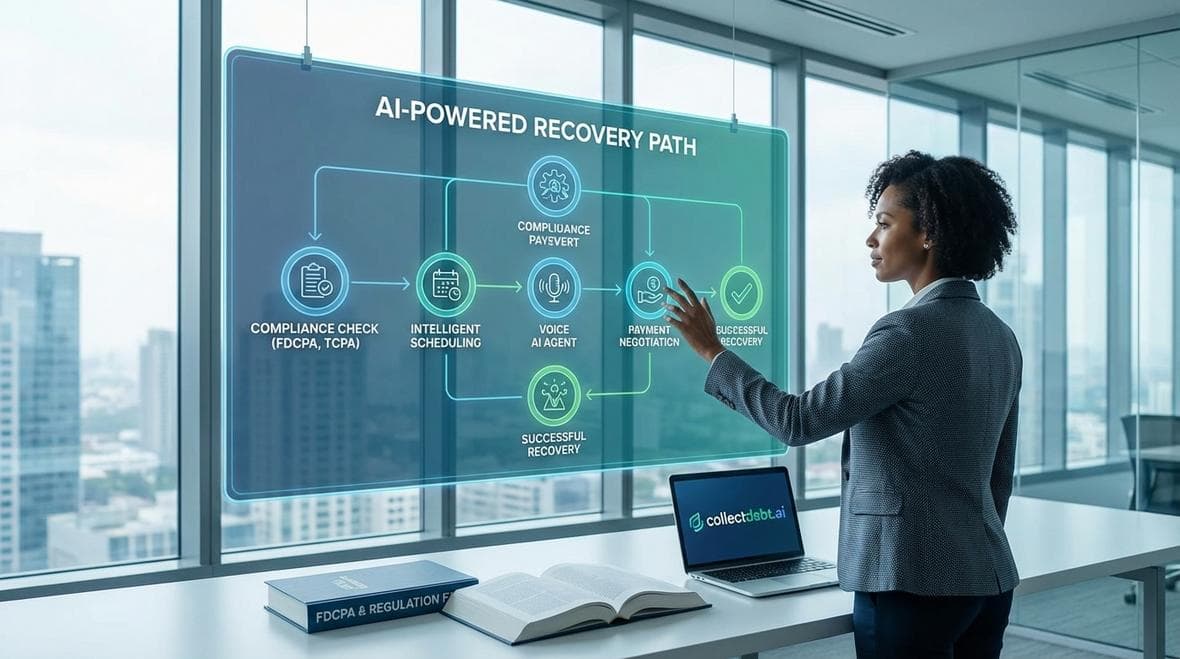
Automated debt collection calls represent a transformative approach to accounts receivable management, leveraging artificial intelligence and machine learning to streamline communication, enhance recovery rates, and maintain strict regulatory compliance. As collection agencies and enterprise AR departments face mounting pressure to reduce operational costs while increasing efficiency, AI-powered debt collection solutions have emerged as the industry standard for 2026.
The debt collection landscape has evolved dramatically over the past few years. According to the CFPB Debt Collection Complaints Analysis - 2024 Regulatory Data, the Consumer Financial Protection Bureau received 207,800 debt collection complaints in 2024, nearly double the 109,900 complaints filed in 2023. This significant increase underscores the critical importance of implementing compliant, automated systems that adhere to FDCPA, Regulation F, TCPA, and UDAAP standards.
For Directors of Operations, Collections Managers, and CFOs seeking scalable alternatives to traditional call centers, automated debt collection calls offer unprecedented advantages in terms of cost reduction, personalization, and multi-channel engagement capabilities.
What Are Automated Debt Collection Calls?
Automated debt collection calls utilize sophisticated AI voice agents and conversational AI platforms to initiate, conduct, and manage debtor communications without human intervention. Unlike traditional Interactive Voice Response (IVR) systems that rely on rigid menu structures, modern conversational AI platforms employ natural language processing, sentiment analysis, and dynamic scripting to create personalized, compliant interactions.
These systems integrate seamlessly with existing collection management software, customer relationship management platforms, and payment processing systems, enabling end-to-end automation of the collections workflow. Key capabilities include:
- Intelligent Call Scheduling: AI algorithms determine optimal contact times based on debtor behavior patterns and historical data
- Right Party Verification: Advanced verification protocols ensure compliance with FDCPA requirements
- Dynamic Conversation Flow: Real-time adaptation to debtor responses, objections, and payment commitments
- Multi-Language Support: Automated translation and localization for diverse debtor populations
- Compliance Monitoring: Continuous adherence to regulatory frameworks with automated disclosure delivery
The Technology Behind Automated Collection Calls
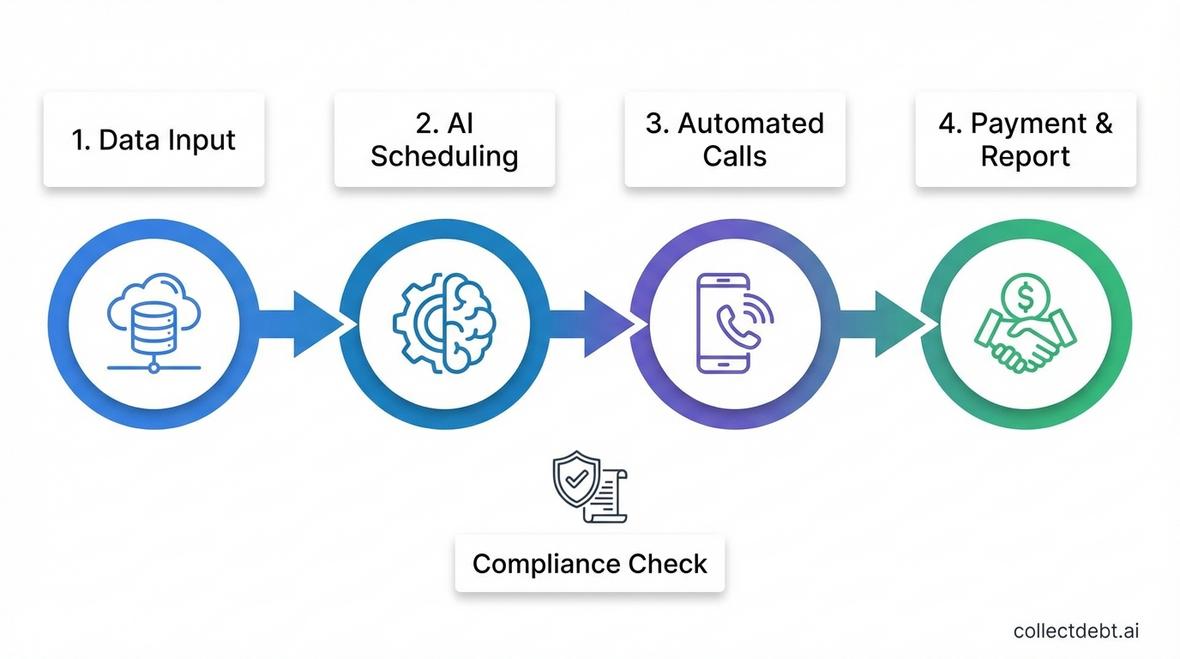
The architecture of modern automated debt collection calls comprises four fundamental components that work in concert to deliver compliant, effective debtor engagement:
1. Data Input and Integration
The process begins with secure data ingestion from existing collection management systems. Customer account information, payment history, contact preferences, and compliance flags are consolidated into a centralized database that feeds the AI scheduling engine. Advanced data extraction capabilities ensure accurate information flow from legacy systems, CRMs, and third-party data providers.
2. AI Scheduling and Optimization
Machine learning algorithms analyze historical contact data to identify optimal calling windows for each debtor segment. Factors such as time zone, previous answer rates, channel preferences, and compliance restrictions are processed to create sophisticated calling queues that maximize contact rates while minimizing regulatory risk.
3. Automated Call Execution
Voice AI agents initiate outbound calls using natural-sounding speech synthesis and conversational AI frameworks. These systems can handle complex scenarios including payment negotiations, dispute resolution, and promise-to-pay arrangements. The AI adapts its approach based on debtor sentiment, objection handling requirements, and compliance protocols.
4. Payment Processing and Reporting
Successful payment commitments trigger automated processing through integrated payment gateways. Comprehensive post-call analysis provides actionable insights into campaign performance, agent effectiveness, and portfolio trends. Real-time dashboards enable managers to monitor key performance indicators and adjust strategies dynamically.
Regulatory Compliance in Automated Debt Collection Calls
Compliance represents the foundational element of any automated debt collection strategy. The regulatory landscape governing collection communications has grown increasingly complex, with the CFPB's Regulation F establishing specific requirements for digital and automated communications.
FDCPA Requirements
The Fair Debt Collection Practices Act establishes strict guidelines for collector behavior, disclosure requirements, and prohibited practices. Automated systems must incorporate mandatory Mini-Miranda warnings, proper identification protocols, and time-of-day restrictions. Learn more about Mini-Miranda rights in debt collection to ensure your automated calls meet federal standards.
TCPA Consent Management
The Telephone Consumer Protection Act requires prior express consent before initiating automated calls to cell phones. Robust consent management frameworks track opt-in sources, maintain detailed records, and honor opt-out requests immediately. Compliance-focused solutions automate consent verification and documentation to mitigate TCPA litigation risk.
Regulation F and Digital Communications
Implemented in November 2021, Regulation F modernized FDCPA for the digital age, establishing specific protocols for email, text message, and voice communications. Automated systems must provide clear opt-out mechanisms, limit contact frequency, and deliver required disclosures in accessible formats.
Operational Benefits and Cost Analysis
The financial case for automated debt collection calls centers on three primary value drivers: labor cost reduction, scalability, and improved recovery rates.
Labor Cost Reduction
Traditional call centers incur significant expenses related to agent salaries, benefits, training, turnover, and quality assurance. Research from Capgemini - Collections Automation Labor Cost Reduction Study demonstrates that automated systems can reduce manual labor hours by 60-75%, translating to substantial operational expense reductions for collections departments. AI agents work 24/7 without breaks, eliminating shift differentials and overtime costs.
Scalability and Throughput
Automated debt collection calls enable collections operations to scale rapidly without proportional increases in headcount. A single AI platform can manage thousands of concurrent conversations, adjusting capacity dynamically based on portfolio volume. This elasticity proves particularly valuable during seasonal fluctuations or portfolio acquisitions.
Recovery Rate Improvement
Personalized communication strategies, optimal contact timing, and consistent messaging contribute to measurably higher recovery rates. AI-enhanced recovery strategies leverage behavioral analytics to identify the most effective negotiation tactics for each debtor segment, resulting in increased payment commitments and reduced delinquency rates.
Implementation Best Practices for Automated Debt Collection Calls
Successful deployment of automated debt collection calls requires strategic planning, change management, and continuous optimization. Organizations should follow these proven implementation practices:
Portfolio Segmentation and Prioritization
Not all accounts benefit equally from automation. Early-stage delinquencies with lower balances typically respond well to automated outreach, while complex commercial accounts may require human expertise. Segment portfolios based on balance size, delinquency stage, previous contact history, and dispute status to optimize automation deployment.
Conversational Design and Script Development
Effective automated debt collection calls require carefully crafted conversation flows that balance compliance requirements with persuasive communication techniques. Develop scripts that incorporate empathy, offer flexible payment options, and handle common objections gracefully. Test variations through A/B testing to identify high-performing approaches.
Integration Architecture
Seamless data flow between collection management systems, payment processors, and AI platforms is essential for operational efficiency. Robust integration capabilities enable real-time account updates, payment posting, and workflow automation across the technology stack.
Performance Monitoring and Optimization
Establish clear key performance indicators including contact rate, right party contact rate, promise-to-pay rate, payment conversion rate, and compliance incident frequency. Implement continuous monitoring dashboards that provide visibility into campaign performance and enable rapid adjustment of calling strategies.
Industry-Specific Applications of Automated Debt Collection Calls
Different industries face unique collections challenges that automated systems address through specialized configurations:
Healthcare Collections
Medical debt collection requires sensitivity to patient circumstances and compliance with HIPAA regulations. Healthcare-focused automated solutions incorporate patient-friendly language, flexible payment plan options, and secure handling of protected health information.
Auto Finance Collections
Vehicle repossession represents a significant concern for auto lenders. Automated collection systems for auto finance prioritize early intervention, offer refinancing options, and coordinate with repossession vendors when necessary.
Utilities and Telecommunications
High-volume, low-balance accounts characterize the utilities and telecom sectors. Automated debt collection calls excel in these environments, processing thousands of accounts daily with minimal per-account costs.
Financial Services
Banks and credit unions leverage automated collections for credit card delinquencies, personal loans, and overdraft recovery. Financial services solutions integrate with core banking systems and offer sophisticated payment arrangement capabilities.
Advanced Features and Capabilities
Modern automated debt collection call platforms incorporate sophisticated features that extend beyond basic voice communication:
Omnichannel Orchestration
Debtors engage through their preferred channels voice, SMS, email, or chat. Omnichannel support systems maintain conversation continuity across touchpoints, enabling seamless transitions between communication methods.
Self-Service Debt Resolution
Self-service platforms empower debtors to review balances, negotiate settlements, and establish payment plans without agent involvement. These portals reduce inbound call volume while improving debtor satisfaction.
Batch Calling Operations
Batch calling capabilities enable simultaneous processing of large account portfolios, applying consistent messaging and compliance protocols across thousands of accounts. Campaign management tools allow precise targeting and performance tracking.
Future Trends and Innovations in Automated Debt Collection Calls
The automated debt collection industry continues evolving rapidly, with several emerging trends shaping the future landscape:
Generative AI Integration
Large language models enable more natural, contextually aware conversations that adapt dynamically to debtor responses. These systems can generate personalized messaging, handle complex objections, and create settlement offers based on real-time negotiation dynamics.
Predictive Analytics and Behavioral Modeling
Advanced analytics platforms predict payment likelihood, optimal contact strategies, and settlement propensity for individual accounts. These insights enable precision targeting and resource allocation to maximize portfolio performance.
Voice Biometrics and Authentication
Biometric verification technologies enhance security while streamlining right party verification processes. Voice authentication reduces friction in the debtor experience while maintaining robust compliance protocols.
Choosing the Right Automated Debt Collection Platform
Selecting an appropriate automated debt collection solution requires careful evaluation of several critical factors:
- Compliance Architecture: Built-in FDCPA, TCPA, and Regulation F compliance with automated monitoring and documentation
- Integration Capabilities: Native connections to popular collection management systems and payment processors
- Scalability: Ability to handle portfolio growth without performance degradation
- Customization Options: Flexible conversation design, industry-specific configurations, and brand alignment
- Analytics and Reporting: Comprehensive performance dashboards and actionable insights
- Support and Training: Vendor commitment to implementation assistance and ongoing optimization
Measuring Success: Key Performance Indicators
Effective management of automated debt collection calls requires monitoring specific metrics that indicate campaign health and operational efficiency:
| Metric | Definition | Target Range |
|---|---|---|
| Contact Rate | Percentage of attempts resulting in call connection | 35-50% |
| Right Party Contact | Percentage of connected calls reaching intended debtor | 65-80% |
| Promise-to-Pay Rate | Percentage of conversations resulting in payment commitment | 15-25% |
| Payment Conversion | Percentage of promises that result in actual payment | 60-75% |
| Compliance Incident Rate | Number of potential violations per 1,000 calls | <0.5 |
| Cost per Dollar Collected | Total operational cost divided by recovered amount | 8-15% |
Frequently Asked Questions
Are automated debt collection calls legal?
Yes, automated debt collection calls are legal when properly implemented with appropriate consent management, compliance protocols, and regulatory adherence. Systems must comply with FDCPA, TCPA, Regulation F, and state-specific collection laws.
How do automated systems handle disputes?
Advanced AI platforms can recognize dispute language, pause collection efforts, document the dispute claim, and route the account for human review or investigation as required by FDCPA Section 809.
Can automated calls negotiate payment arrangements?
Modern conversational AI systems can evaluate debtor financial circumstances, propose payment plan options within pre-approved parameters, and secure binding payment commitments with appropriate confirmations.
What happens if a debtor requests to speak with a human?
Compliant automated systems immediately honor requests for human transfer, routing the call to available agents or scheduling callback appointments based on debtor preferences.
How do automated systems maintain call recordings for compliance?
Enterprise-grade platforms automatically record all interactions, store them in secure, compliant repositories, and make them searchable for quality assurance, dispute resolution, and regulatory examination purposes.
Conclusion
Automated debt collection calls represent the convergence of artificial intelligence, regulatory compliance, and operational efficiency in modern accounts receivable management. For collections leaders facing pressure to reduce costs while improving recovery performance, AI-powered voice agents offer a proven path forward. By implementing end-to-end collection automation, organizations can achieve measurable improvements in contact rates, payment conversion, and portfolio performance while maintaining strict adherence to evolving regulatory requirements. The transition from manual call centers to intelligent automation is no longer a future consideration it's an operational imperative for competitive collections operations in 2026 and beyond.
Ready to Transform Your Collections Process?
See how CollectDebt.ai can help you automate debt collection, reduce costs, and improve compliance.