AI Call Agent: Complete 2026 Guide To Automated Debt Collection Solutions
Understanding AI Call Agents in Debt Collection
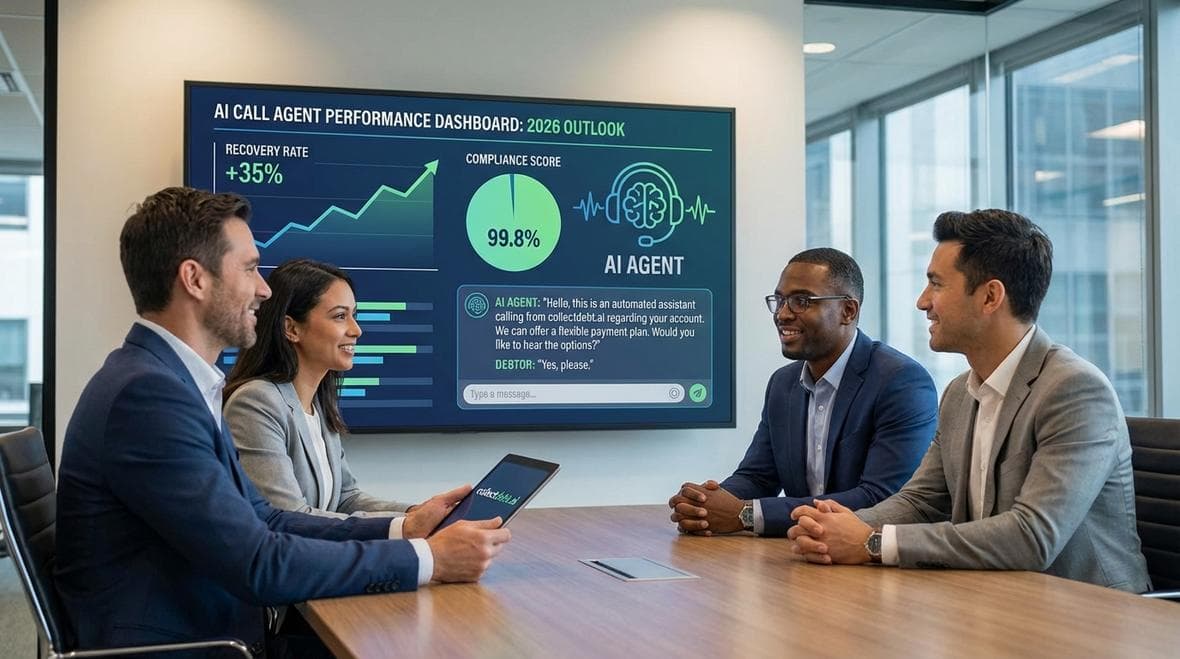
The landscape of debt collection has transformed dramatically with the emergence of AI call agent technology. These sophisticated systems leverage artificial intelligence to handle complex conversations, verify debtor identities, and facilitate payment arrangements without human intervention. As businesses face mounting pressure to improve recovery rates while reducing operational costs, AI call agents have become essential tools for modern collection strategies.
An ai call agent operates by combining natural language processing, machine learning algorithms, and conversational AI to engage debtors through voice or text channels. Unlike traditional interactive voice response (IVR) systems that rely on rigid menu structures, AI call agents understand context, respond to nuanced queries, and adapt their communication style based on debtor behavior. This creates more natural, productive conversations that lead to higher resolution rates.
Research from Precedence Research: AI Debt Collection Market Growth and Projections indicates the AI debt collection market is projected to grow from USD 3.22 billion in 2026 to USD 11.38 billion by 2035, demonstrating a compound annual growth rate of 15.05%. This explosive growth reflects the proven effectiveness of AI-powered solutions in improving collection outcomes while maintaining regulatory compliance.
Core Components of AI Call Agent Technology
Conversational AI Foundation
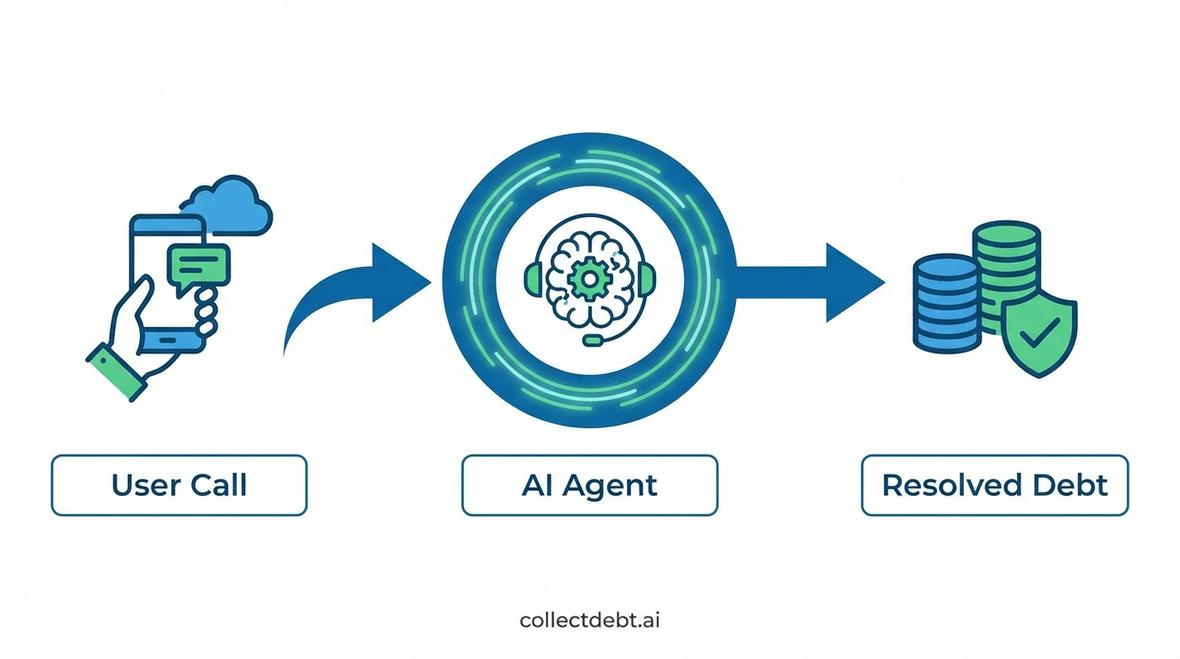
The backbone of any effective ai call agent system is its conversational AI engine. This technology enables machines to understand spoken or written language, interpret intent, and generate appropriate responses in real-time. Modern conversational AI for debt collection goes beyond simple keyword recognition to comprehend context, sentiment, and even emotional cues from debtors.
Advanced AI call agents utilize large language models (LLMs) trained on millions of debt collection interactions. These models learn optimal conversation patterns, effective negotiation techniques, and compliance-safe language that maximizes payment commitments. The system continuously improves through machine learning, analyzing successful outcomes and refining its approach with each interaction.
Natural Language Processing Capabilities
Natural language processing (NLP) enables ai call agents to parse debtor responses, identify key information, and extract actionable data from unstructured conversations. This includes recognizing payment promises, dispute claims, hardship declarations, and requests for additional information. The NLP engine must handle various accents, speech patterns, and communication styles while maintaining accuracy across diverse debtor populations.
Sophisticated NLP systems also detect compliance risks in real-time. If a debtor makes statements indicating vulnerability, harassment concerns, or legal objections, the AI call agent can immediately adjust its approach or escalate to human oversight. This protective capability ensures regulatory compliance while maintaining collection effectiveness.
Automated Speech Recognition
For voice-based interactions, automated speech recognition (ASR) technology converts spoken language into text that the AI can process. High-quality ASR systems achieve accuracy rates exceeding 95% in ideal conditions, though real-world collection scenarios often involve background noise, emotional speech, and technical terminology that challenge recognition systems.
Leading ai call agent platforms implement multi-model ASR approaches, combining general speech recognition with domain-specific models trained on debt collection vocabulary. This hybrid approach improves accuracy when processing financial terms, account numbers, payment amounts, and industry-specific jargon that general-purpose systems might misinterpret.
Deployment Strategies for AI Call Agents
Outbound Collection Campaigns
Outbound calling represents the most common deployment scenario for AI call agents. These systems can initiate thousands of simultaneous calls, reaching debtors across multiple time zones and contact attempts. The batch calling capabilities of AI platforms enable collection agencies to scale operations without proportional increases in staff costs.
Effective outbound AI call agents follow sophisticated dialing strategies that optimize contact rates. The system analyzes historical data to determine the best times to reach specific debtor segments, adjusts call frequency based on previous responses, and prioritizes accounts based on predicted payment likelihood. This intelligent scheduling dramatically improves right-party contact rates compared to traditional auto-dialer systems.
Inbound Call Automation
When debtors call collection agencies, ai call agents can handle the entire interaction without human involvement. These inbound conversational AI systems verify caller identity, provide account information, accept payment arrangements, and resolve disputes autonomously. This creates a seamless 24/7 service experience that meets modern consumer expectations for instant access.
Inbound AI call agents excel at handling high call volumes during peak periods without wait times or service degradation. During month-end payment cycles or after communication campaigns, traditional call centers experience overflow that leads to abandoned calls and missed collection opportunities. AI systems scale instantly to accommodate demand spikes while maintaining consistent service quality.
Omnichannel Integration
Modern debtors expect to engage through their preferred communication channels, whether voice, SMS, email, or chat. Advanced ai call agent platforms provide omnichannel support that maintains conversation context across channels. A debtor might start a conversation via SMS, continue through a voice call, and complete payment through a web portal, with the AI seamlessly tracking the entire journey.
This omnichannel approach significantly improves collection outcomes by meeting debtors where they are most comfortable engaging. Younger demographics often prefer text-based interactions, while older debtors may favor traditional phone calls. AI call agents adapt to these preferences without requiring separate systems or losing conversation history across channels.
Key Features and Capabilities
Right Party Verification
One of the most critical capabilities of any ai call agent is accurate right party verification. Before discussing account details or collection information, the system must confirm it's speaking with the actual debtor or authorized representative. Right party verification protects consumer privacy, ensures regulatory compliance, and prevents wasted collection efforts on wrong-party contacts.
AI systems employ multiple verification methods, including voice biometrics, knowledge-based authentication questions, and multi-factor identification. These approaches balance security requirements with user experience, avoiding overly burdensome verification processes that cause debtors to abandon the interaction. Advanced systems learn from verification patterns to streamline the process for frequent callers while maintaining strict security for first-time contacts.
Payment Arrangement Automation
The ultimate goal of most collection interactions is securing a payment commitment. AI call agents excel at negotiating payment arrangements that balance debtor capacity with creditor requirements. The system analyzes account history, payment behavior patterns, and stated financial constraints to propose realistic payment plans that maximize compliance rates.
Through promise to pay functionality, AI call agents can instantly generate payment agreements, process initial payments, and schedule automated follow-up communications. This immediate resolution capability prevents the delay and dropout that often occurs when debtors must wait for human agents to process arrangements. Studies show that payment commitments secured during the initial contact have significantly higher fulfillment rates than those requiring callback or additional steps.
Self-Service Capabilities
Empowering debtors to resolve accounts independently through self-service debt resolution reduces collection costs while improving debtor satisfaction. AI call agents guide users through self-service portals, explaining balance details, payment options, and dispute processes without human involvement. This approach works particularly well for straightforward accounts where debtors acknowledge the debt and simply need convenient payment methods.
Self-service AI systems can process payments through various methods, including credit cards, ACH transfers, and digital wallets. The integration with payment processors happens seamlessly within the conversation flow, allowing debtors to complete the entire transaction through voice commands or text responses without navigating separate payment portals.
Post-Call Analysis and Insights
Beyond the collection interaction itself, ai call agents generate valuable intelligence through post-call analysis. Every conversation is transcribed, analyzed for compliance adherence, and evaluated for effectiveness metrics. This creates a comprehensive dataset that identifies successful conversation patterns, reveals common debtor objections, and highlights training opportunities for hybrid human-AI teams.
The analytical capabilities of AI systems provide unprecedented visibility into collection operations. Managers can identify which conversation strategies yield the highest payment commitments, which account segments respond best to specific approaches, and which compliance risks appear most frequently. This data-driven approach to collections optimization was impossible with traditional human-only calling operations.
Industry-Specific Applications
Healthcare Revenue Cycle
The healthcare industry faces unique collection challenges due to complex billing structures, insurance coordination issues, and sensitive patient relationships. AI call agents designed for healthcare collections understand medical billing terminology, can explain insurance adjustments, and navigate payment assistance programs while maintaining HIPAA compliance.
Healthcare-focused ai call agents demonstrate particular effectiveness in early-out collections, contacting patients shortly after service to clarify bills and secure payment before accounts become seriously delinquent. The non-confrontational nature of AI interactions helps preserve the patient-provider relationship that hospitals and medical practices value highly.
Financial Services and Banking
Banks, credit card issuers, and lending institutions deploy AI call agents to manage collections across diverse product portfolios. Financial services applications require sophisticated integration with core banking systems, real-time balance verification, and complex payment arrangement options including forbearance, modification, and settlement programs.
The regulatory environment for financial collections demands exceptional compliance capabilities. AI call agents in this sector must adhere to FDCPA requirements, TCPA restrictions, and state-specific collection laws while documenting every interaction for audit purposes. According to Capgemini: Digital Transformation in Collections and Receivables, enterprise-scale AI implementation in financial services has demonstrated significant cost reductions while improving recovery performance benchmarks.
Auto Finance Collections
The auto finance sector leverages AI call agents to manage collections while minimizing vehicle repossessions. These systems understand the unique dynamics of secured lending, where maintaining asset value through timely recovery must be balanced against the costs and customer relationship damage of repossession.
AI call agents in auto finance can discuss payment extensions, defer payments to loan end, or arrange voluntary surrenders when necessary. The technology integrates with GPS tracking systems to verify vehicle location, assess repossession risk, and prioritize accounts where intervention is most urgent. This intelligent prioritization ensures human collectors focus on high-value, complex situations while AI handles routine collection contacts.
Utilities and Telecommunications
Service providers in the utilities and telecommunications sectors deploy AI call agents to manage high-volume, relatively low-balance collection portfolios. These industries experience seasonal payment fluctuations, service restoration urgency, and the unique challenge of collecting from customers who remain active service users despite payment delinquency.
AI systems in this sector excel at segmenting accounts based on payment history patterns, identifying customers experiencing temporary financial disruption versus chronic non-payers. The technology can automatically offer payment arrangements that prevent service disconnection while securing commitment for past-due balances.
Integration and Implementation Considerations
Technology Stack Requirements
Successful ai call agent deployment requires robust technical infrastructure. The system must integrate with existing collection management platforms, customer relationship management systems, dialer technologies, and payment processors. These integrations enable seamless data flow, real-time account updates, and synchronized communication across channels.
Cloud-based AI platforms offer significant advantages in scalability, reliability, and ongoing enhancement. Rather than maintaining on-premise infrastructure that requires constant updates, cloud solutions provide automatic improvements, security patches, and feature additions without disruption to collection operations.
Data Requirements and Training
AI call agents perform best when trained on historical collection data specific to the deploying organization. This training data should include conversation transcripts, payment outcomes, debtor demographics, and account characteristics. The AI learns patterns that predict successful collection strategies for different account segments, enabling personalized approaches at scale.
Organizations implementing AI call agents should plan for an initial training period where the system learns organizational preferences, compliance requirements, and effective conversation patterns. This training phase typically involves monitoring AI interactions, providing feedback on performance, and adjusting conversation flows based on observed outcomes.
Compliance and Governance
Regulatory compliance represents a critical implementation consideration for ai call agent systems. The technology must adhere to the Fair Debt Collection Practices Act (FDCPA), Telephone Consumer Protection Act (TCPA), and state-specific collection regulations. Organizations should implement robust compliance frameworks that include regular auditing of AI interactions, documentation of all communications, and escalation protocols for high-risk scenarios.
AI systems offer compliance advantages over human collectors by consistently following prescribed communication scripts, never engaging in prohibited practices like harassment or misrepresentation, and automatically ceasing contact when legally required. However, organizations remain legally responsible for AI actions, making compliance oversight essential even with automated systems.
Measuring Success and ROI
Performance Metrics
Organizations evaluating ai call agent effectiveness should track multiple performance indicators beyond simple dollars collected. Key metrics include right-party contact rate, promise-to-pay conversion rate, payment fulfillment rate, cost per dollar collected, and compliance adherence. These metrics provide a comprehensive view of AI performance across operational efficiency, collection effectiveness, and risk management dimensions.
Contact rate improvements represent one of the most immediate benefits of AI implementation. Traditional human-operated collections struggle to attempt more than a small fraction of accounts regularly, while AI systems can contact entire portfolios systematically. This increased contact frequency typically yields 20-40% improvements in overall collection rates, even before accounting for conversation effectiveness improvements.
Cost-Benefit Analysis
The economic case for AI call agents centers on the dramatic reduction in cost per contact and cost per dollar collected. While human collectors typically cost $25-40 per hour including benefits and overhead, AI interactions cost a fraction of that amount. This cost differential enables profitable collection on smaller balance accounts that would be uneconomical to work with human staff.
Organizations should also consider opportunity costs when evaluating AI implementation. Human collectors freed from routine accounts can focus on complex negotiations, disputed accounts, and high-value debtors where human expertise and relationship-building provide maximum value. This optimization of human resources often delivers returns exceeding the direct cost savings of AI automation.
Future Trends in AI Call Agent Technology
Emotional Intelligence Enhancements
The next generation of ai call agents will incorporate sophisticated emotional intelligence capabilities. These systems will detect stress, frustration, or financial distress in debtor communications and adapt conversation approaches accordingly. Empathetic AI that recognizes when debtors face genuine hardship versus avoidance tactics will improve both collection outcomes and consumer treatment.
Predictive Analytics Integration
Future AI call agents will leverage predictive analytics to determine optimal collection strategies before initiating contact. By analyzing hundreds of debtor characteristics and account attributes, predictive models will recommend the best time to contact, preferred communication channel, likely payment capacity, and most effective conversation approach. This predictive guidance will enable AI systems to continuously optimize collection strategies at the individual account level.
Multilingual Capabilities
As collection portfolios become increasingly diverse, ai call agents with seamless multilingual capabilities will become essential. Rather than maintaining separate language-specific systems, next-generation platforms will detect debtor language preference automatically and conduct entire conversations in the appropriate language while maintaining consistent collection logic and compliance standards across all languages.
Frequently Asked Questions
How accurate are AI call agents compared to human collectors?
AI call agents achieve comparable or superior accuracy to human collectors in routine collection scenarios. They consistently follow compliance requirements, never deviate from approved scripts, and eliminate human errors in data entry and documentation. However, complex negotiations and unusual situations may still benefit from human expertise.
Can debtors tell they're speaking with an AI?
Modern ai call agents using advanced conversational AI can conduct highly natural conversations that many debtors do not immediately recognize as automated. However, ethical AI deployment includes disclosure requirements, and most jurisdictions require identifying AI systems when legally mandated. Transparency about AI use builds trust while still delivering operational benefits.
What happens when an AI call agent encounters a situation it cannot handle?
Sophisticated AI systems recognize their limitations and seamlessly escalate complex situations to human collectors. This might occur when debtors make legal threats, claim identity theft, request accommodations under disability laws, or present unique circumstances outside normal collection scenarios. The AI documents the interaction and provides context to human agents for continuity.
How long does it take to implement an AI call agent system?
Implementation timelines vary based on organizational complexity, existing technology infrastructure, and customization requirements. Basic deployments can be operational within 4-8 weeks, while enterprise implementations with extensive integrations and customization may require 3-6 months. Cloud-based solutions typically deploy faster than on-premise systems.
What ROI can organizations expect from AI call agent implementation?
Most organizations report 20-35% improvements in collection rates within the first year of AI implementation, combined with 40-60% reductions in cost per dollar collected. The exact ROI depends on portfolio characteristics, existing collection effectiveness, and implementation scope. Organizations with lower pre-AI performance typically see more dramatic improvements.
Conclusion
The ai call agent represents a transformative technology that is reshaping debt collection operations across industries. By combining conversational AI, natural language processing, and automated speech recognition, these systems deliver scalable, compliant, and effective collection capabilities that exceed traditional approaches. As the technology continues advancing with emotional intelligence, predictive analytics, and multilingual support, organizations that embrace AI call agents will gain significant competitive advantages in recovery rates, operational efficiency, and consumer experience. The market growth projections underscore the industry's recognition that AI-powered collections are not just an innovation but an essential evolution for sustainable collection operations in 2026 and beyond. To explore how AI debt collection solutions can transform your recovery operations, consider implementing these advanced technologies as part of your comprehensive collection strategy.
Ready to Transform Your Collections Process?
See how CollectDebt.ai can help you automate debt collection, reduce costs, and improve compliance.