Right Party Contact Automation: The Complete Guide To AI-Powered Debt Collection Verification

In the debt collection industry, reaching the right person at the right time can mean the difference between successful recovery and wasted resources. Right party contact automation represents a transformative approach to debt collection that leverages artificial intelligence to verify debtor identity, optimize contact strategies, and ensure compliance all while dramatically reducing operational costs. For Directors of Operations, Collections Managers, and CFOs overseeing accounts receivable departments, understanding and implementing right party contact automation is no longer optional; it's essential for competitive survival in 2026.
Traditional debt collection relies heavily on manual dialing, human verification processes, and labor-intensive contact attempts that often result in wrong-party contacts, compliance violations, and poor recovery rates. According to Federal Reserve data on consumer debt, delinquency, and collections exposure, millions of American households carry past-due obligations, creating massive demand for efficient collection systems. Right party contact automation addresses this challenge by combining AI-driven verification, behavioral analytics, and omnichannel outreach to maximize contact success while minimizing risk.
What Is Right Party Contact Automation?
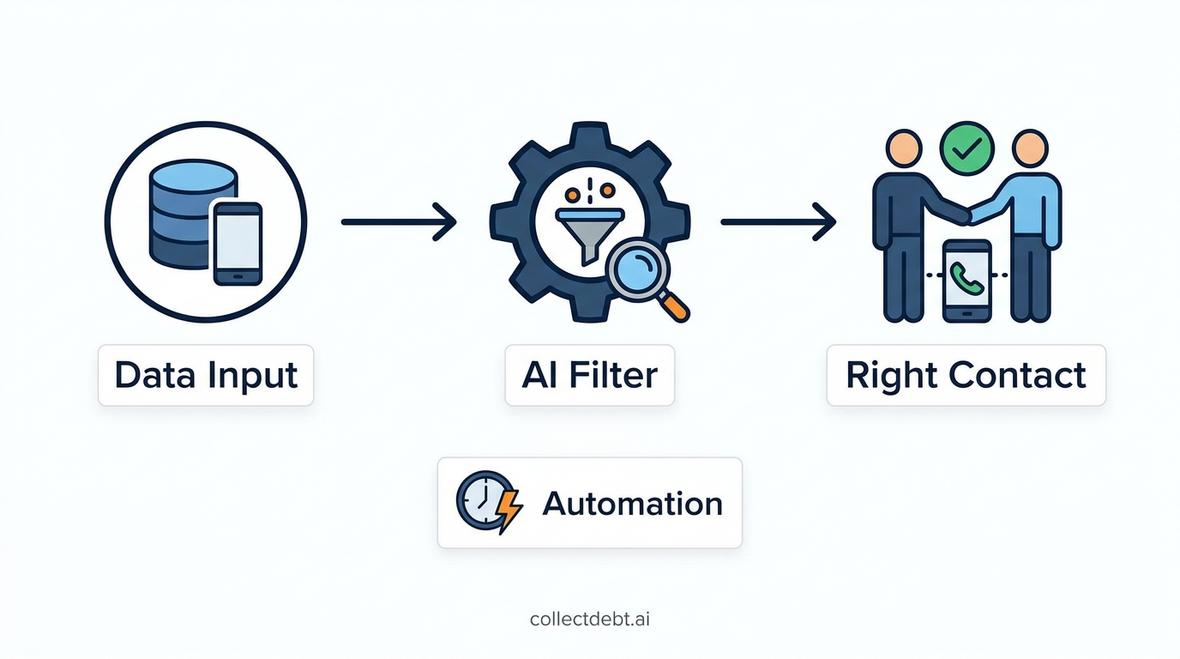
Right party contact automation is an AI-powered system that automatically identifies, verifies, and engages the correct individual responsible for a debt obligation across multiple communication channels. Unlike traditional auto-dialers that simply place calls based on static lists, modern right party contact automation employs machine learning algorithms, voice biometrics, natural language processing, and behavioral pattern recognition to confirm debtor identity before initiating substantive collection conversations.
The core components of right party contact automation include:
- Identity Verification AI: Algorithms that analyze voice patterns, response behaviors, and authentication data to confirm the person on the line matches the account holder
- Skip Tracing Integration: Real-time access to updated contact information through data aggregation and public records analysis
- Compliance Monitoring: Automated adherence to FDCPA, TCPA, and state-specific regulations throughout every interaction
- Channel Optimization: Dynamic selection of communication methods (voice, SMS, email, portal) based on debtor preferences and response history
- Behavioral Prediction: Machine learning models that forecast the most effective contact times and messaging strategies for individual accounts
The Business Case for Right Party Contact Automation
The economic argument for right party contact automation is compelling. Traditional call center operations face escalating costs driven by labor expenses, training requirements, compliance risk, and inefficiency. Unionization and wage data impacting call center and collections labor costs demonstrates the upward pressure on personnel expenses in collections operations, making automation not just attractive but financially necessary.
Consider the typical economics of manual debt collection: collectors spend approximately 60-70% of their time on non-productive activities wrong numbers, disconnected lines, voicemails, and verification processes. Each successful right-party contact requires an average of 3-5 attempts, and even then, many interactions fail to progress toward resolution. Right party contact automation reverses this equation by pre-qualifying contacts, automating verification, and ensuring that human collectors (when deployed) engage only with verified account holders ready for substantive conversations.
Cost Reduction Metrics
Organizations implementing right party contact automation typically realize:
- 40-60% reduction in cost per account touched
- 70-85% decrease in wrong-party contact complaints
- 50-75% improvement in collector productivity through pre-verified warm transfers
- 30-45% increase in right-party contact rates within the first attempt cycle
- 20-35% improvement in overall recovery rates due to faster, more personalized engagement
These improvements stem directly from AI's ability to process massive datasets, learn from interaction patterns, and continuously optimize contact strategies across entire portfolios. The AI debt collection solution offered by platforms like CollectDebt.AI exemplifies this comprehensive approach.
How Right Party Contact Automation Works
Understanding the technical workflow of right party contact automation helps decision-makers evaluate solutions and set realistic implementation expectations. The process typically unfolds in several integrated stages:
Data Enrichment and Skip Tracing
Before any contact attempt, the system enriches existing account data with updated information from multiple sources credit bureaus, public records, social media, utility connections, and employment databases. This step ensures contact information is current and reduces wasted attempts on outdated phone numbers or addresses. Advanced right party verification capabilities continuously update contact profiles based on successful and failed interaction attempts.
Contact Strategy Optimization
Machine learning algorithms analyze historical performance data to determine optimal contact times, preferred channels, and messaging approaches for each account segment. Rather than applying one-size-fits-all strategies, the system personalizes outreach based on debtor demographics, account characteristics, payment history, and previous interaction outcomes. This intelligent routing maximizes contact success while respecting consumer preferences and regulatory requirements.
Automated Verification Process
When contact is established, the AI system conducts multi-factor verification without human intervention. This may include:
- Voice biometric analysis comparing vocal characteristics to previous authenticated interactions
- Knowledge-based authentication using account-specific information only the debtor would know
- Behavioral analysis of response patterns and conversational cues indicating identity confidence
- Device fingerprinting and caller ID validation
Only after verification thresholds are met does the system proceed to collection messaging or, in hybrid models, transfer to a human agent with verified debtor identity confirmed.
Compliant Engagement and Documentation
Throughout every interaction, right party contact automation maintains detailed audit trails documenting verification steps, consent capture, disclosure delivery, and conversation content. This automated compliance framework protects organizations against FDCPA violations, TCPA litigation, and regulatory penalties. The compliance solutions embedded in modern platforms ensure every communication adheres to federal and state requirements without manual oversight.
Key Features of Advanced Right Party Contact Automation Systems
Not all automation platforms offer equivalent capabilities. When evaluating right party contact automation solutions, decision-makers should prioritize these essential features:
Omnichannel Orchestration
Modern consumers engage across voice, text, email, and digital portals. Effective automation must coordinate messaging across all channels, maintaining conversation continuity regardless of medium. Omnichannel support ensures debtors receive consistent, personalized communication whether they respond via SMS, answer an automated call, or log into a self-service portal.
Conversational AI Capabilities
The most sophisticated systems employ natural language understanding and generation to conduct human-like conversations that adapt based on debtor responses. These AI agents can answer questions, negotiate payment arrangements, and guide self-service resolution without human intervention. The inbound conversational AI functionality handles incoming calls intelligently, reducing wait times and automating routine inquiries.
Promise-to-Pay Automation
Securing payment commitments represents a critical milestone in the collection process. Advanced automation systems facilitate promise-to-pay arrangements through conversational AI that negotiates terms, processes payments, and schedules follow-up automatically, converting contact success into actual recovery.
Self-Service Debt Resolution
Empowering debtors to resolve obligations on their own terms improves satisfaction and accelerates payment. Self-service debt resolution portals integrated with verification automation allow verified account holders to view balances, arrange payments, and request hardship accommodations without agent involvement, reducing operational costs while improving debtor experience.
Industry-Specific Applications of Right Party Contact Automation
Different sectors face unique challenges in debt collection that right party contact automation addresses with specialized capabilities:
Healthcare Collections
Medical debt collection requires sensitive communication handling and complex insurance coordination. Right party contact automation in healthcare settings streamlines patient verification, insurance claims follow-up, and payment plan arrangements while maintaining HIPAA compliance and compassionate messaging appropriate to medical contexts.
Financial Services Recovery
Banks, credit unions, and lenders managing delinquent consumer loans benefit from automation's ability to segment portfolios, prioritize high-value accounts, and maintain rigorous regulatory compliance. Financial service applications of right party contact automation integrate seamlessly with core banking systems and credit reporting platforms.
Utilities and Telecommunications
Service providers face high-volume, lower-balance collections requiring cost-efficient contact strategies. Automation platforms designed for utilities and telecom industries excel at batch processing, automated payment arrangements, and service restoration coordination tied to payment receipt.
Implementation Considerations and Best Practices
Successfully deploying right party contact automation requires careful planning and change management. Organizations should address these critical considerations:
Data Quality and Integration
Automation effectiveness depends entirely on data quality. Before implementation, audit existing debtor databases for accuracy, completeness, and currency. Establish integration protocols with upstream systems (loan origination, billing, CRM) to ensure the automation platform receives clean, timely data. Poor data quality undermines verification accuracy and contact success regardless of AI sophistication.
Compliance Framework Configuration
Work closely with legal counsel to configure compliance rules matching your organization's risk tolerance and regulatory environment. This includes setting contact attempt limits, time-of-day restrictions, consent requirements, mini-Miranda scripting, and dispute handling protocols. Leverage the platform's FDCPA compliance capabilities to automate adherence without constant manual oversight.
Human-AI Collaboration Models
Determine the optimal balance between fully automated interactions and human-assisted collections. Many organizations adopt a tiered approach: AI handles initial contact, verification, and routine accounts while routing complex situations, disputes, or high-value accounts to experienced collectors armed with AI-generated insights. This hybrid model maximizes efficiency while preserving human judgment for sensitive situations.
Performance Monitoring and Optimization
Establish KPIs tracking right-party contact rates, verification accuracy, compliance metrics, recovery performance, and cost efficiency. Modern platforms provide real-time dashboards and analytics enabling continuous optimization. According to BLS data on private‑sector access to wellness and employee assistance programs that support collections workforce productivity and cost control, operational efficiency improvements directly impact overall organizational performance and workforce sustainability.
Measuring ROI and Success Metrics
Quantifying the return on investment from right party contact automation requires tracking both cost savings and revenue improvements:
Cost Metrics
- Cost per contact attempt (pre and post-automation)
- Cost per successful right-party contact
- Cost per dollar collected
- Labor cost reduction through automation displacement
- Compliance cost avoidance (reduced litigation and regulatory penalties)
Performance Metrics
- Right-party contact rate (percentage of attempts reaching verified debtors)
- First-contact resolution rate
- Promise-to-pay conversion rate
- Liquidation rate (percentage of contacted accounts resulting in payment)
- Days sales outstanding (DSO) improvement
- Overall recovery rate increase
Quality and Compliance Metrics
- Wrong-party contact complaints
- FDCPA/TCPA violation incidents
- Consumer satisfaction scores
- Dispute rate
- Audit finding severity and frequency
Organizations implementing comprehensive right party contact automation typically achieve ROI within 6-12 months, driven primarily by labor cost reduction and recovery rate improvements. The ROI comparison between generative AI and traditional debt collection demonstrates substantial financial advantages favoring automation.
Future Trends in Right Party Contact Automation
The evolution of right party contact automation continues accelerating, with several emerging trends shaping the next generation of capabilities:
Predictive Analytics and Behavioral Modeling
Advanced machine learning models increasingly predict not just when to contact debtors, but which accounts are most likely to pay, which require special handling, and which represent the highest return on collection effort. These predictive insights enable portfolio-level optimization that maximizes recovery while minimizing resource expenditure.
Voice Emotion and Sentiment Analysis
Next-generation systems analyze vocal tone, speech patterns, and emotional cues during conversations to detect distress, frustration, or payment intent. This emotional intelligence enables real-time conversation adjustment, escalation to human agents when appropriate, and more empathetic, effective collection strategies.
Blockchain Verification and Data Security
Emerging verification technologies leverage blockchain-based identity systems and decentralized data validation to enhance security, reduce fraud, and provide irrefutable audit trails. These capabilities address growing privacy concerns and regulatory scrutiny around consumer data handling in collections.
Regulatory AI and Compliance Automation
As collection regulations become increasingly complex and varied across jurisdictions, specialized AI systems monitor regulatory changes, automatically update compliance rules, and proactively identify potential violations before they occur. This regulatory intelligence reduces compliance burden and risk exposure for collection organizations.
Selecting the Right Automation Partner
Choosing a right party contact automation platform represents a significant strategic decision. Evaluate potential partners based on:
- Technology maturity: Proven AI capabilities with documented performance in production environments
- Integration flexibility: Ability to connect with existing systems (dialers, CRM, loan servicing platforms)
- Compliance expertise: Deep understanding of FDCPA, TCPA, and industry-specific regulations
- Scalability: Capacity to handle current volume with room for growth
- Support and training: Comprehensive onboarding, ongoing optimization assistance, and responsive technical support
- Pricing transparency: Clear cost structure aligned with your usage patterns and volume
CollectDebt.AI offers a comprehensive solution addressing all these criteria, with specialized capabilities for end-to-end collection workflows from initial contact through resolution and payment processing. The platform's proven performance across multiple industries and account types makes it an ideal choice for organizations seeking to modernize their collection operations.
Frequently Asked Questions
What is the primary benefit of right party contact automation?
The primary benefit is dramatically improved efficiency in reaching and verifying the correct debtor while reducing costs associated with wrong-party contacts, compliance violations, and wasted collection efforts. Organizations typically see 40-60% cost reductions and 30-45% improvements in right-party contact rates.
How does automation ensure FDCPA and TCPA compliance?
Advanced automation platforms embed compliance rules directly into their workflows, automatically enforcing contact attempt limits, time restrictions, consent requirements, and disclosure delivery. Every interaction is documented with detailed audit trails, and the system prevents non-compliant actions before they occur rather than relying on manual oversight.
Can right party contact automation replace human collectors entirely?
While automation handles many routine collection tasks, most organizations adopt hybrid models combining AI efficiency with human expertise for complex situations, disputes, and high-value accounts. The optimal balance depends on account characteristics, recovery strategies, and organizational capabilities, but complete human replacement is neither necessary nor typically advisable for maximum performance.
How long does implementation typically take?
Implementation timelines vary based on organizational complexity, data quality, and integration requirements, but most organizations complete deployment within 8-16 weeks. This includes data migration, system configuration, compliance rule setup, testing, and staff training. Phased rollouts starting with specific portfolio segments can accelerate time-to-value.
What data is required for effective right party contact automation?
Essential data includes debtor name, account number, balance information, contact details (phone, email, address), account history, and previous interaction records. Enhanced data such as demographic information, payment history, employment details, and communication preferences improves performance but is not strictly required for basic functionality.
How does automation handle disputes and special circumstances?
Modern systems detect dispute indicators through natural language processing and route these situations to human specialists with appropriate expertise. The automation documents the dispute, suspends collection activity as required by regulation, and ensures proper handling according to organizational policies and legal requirements.
Conclusion
Right party contact automation represents a fundamental transformation in debt collection, enabling organizations to achieve superior recovery rates while reducing costs and compliance risk. By leveraging AI-powered verification, omnichannel orchestration, and behavioral intelligence, collection agencies and accounts receivable departments can maximize the efficiency of every contact attempt while improving debtor experience. For decision-makers evaluating their collection strategies in 2026, implementing robust right party contact automation is no longer a competitive advantage it's a competitive necessity. The combination of proven ROI, regulatory protection, and operational efficiency makes this technology essential for any organization serious about optimizing their recovery operations.
Ready to Transform Your Collections Process?
See how CollectDebt.ai can help you automate debt collection, reduce costs, and improve compliance.