Chatbot KPIs: Essential Metrics For AI-Powered Debt Collection Success

In the rapidly evolving landscape of debt collection, artificial intelligence and conversational chatbots have become indispensable tools for agencies seeking to maximize recovery rates while maintaining compliance and reducing operational costs. However, deploying AI-powered chatbots without proper performance measurement is like navigating without a compass. Understanding and tracking the right chatbot KPIs is critical for collections managers, operations directors, and CFOs who need data-driven insights to justify investments, optimize strategies, and demonstrate ROI.
This comprehensive guide explores the essential chatbot KPIs that matter most in debt collection environments, how to measure them effectively, and actionable strategies to improve performance across every metric that impacts your bottom line.
Understanding Chatbot KPIs in Debt Collection Context
Key Performance Indicators (KPIs) for chatbots in debt collection extend far beyond simple engagement metrics. While traditional customer service chatbots might focus primarily on response times and user satisfaction, debt collection chatbots must balance multiple competing objectives: maximizing recovery rates, ensuring regulatory compliance, reducing operational costs, and maintaining positive debtor relationships.
The most effective chatbot KPIs for debt collection fall into five critical categories: engagement metrics, operational efficiency indicators, compliance and quality scores, financial performance measures, and debtor experience metrics. Each category provides unique insights into different aspects of your AI-powered collection strategy, and together they paint a comprehensive picture of performance.
For collection agencies implementing AI debt collection solutions, establishing baseline measurements before deployment and tracking improvements over time is essential for demonstrating value and identifying optimization opportunities.
Core Engagement Metrics for Collection Chatbots
Engagement metrics reveal how effectively your chatbot captures debtor attention and maintains meaningful conversations throughout the collection journey.
Deflection Rate
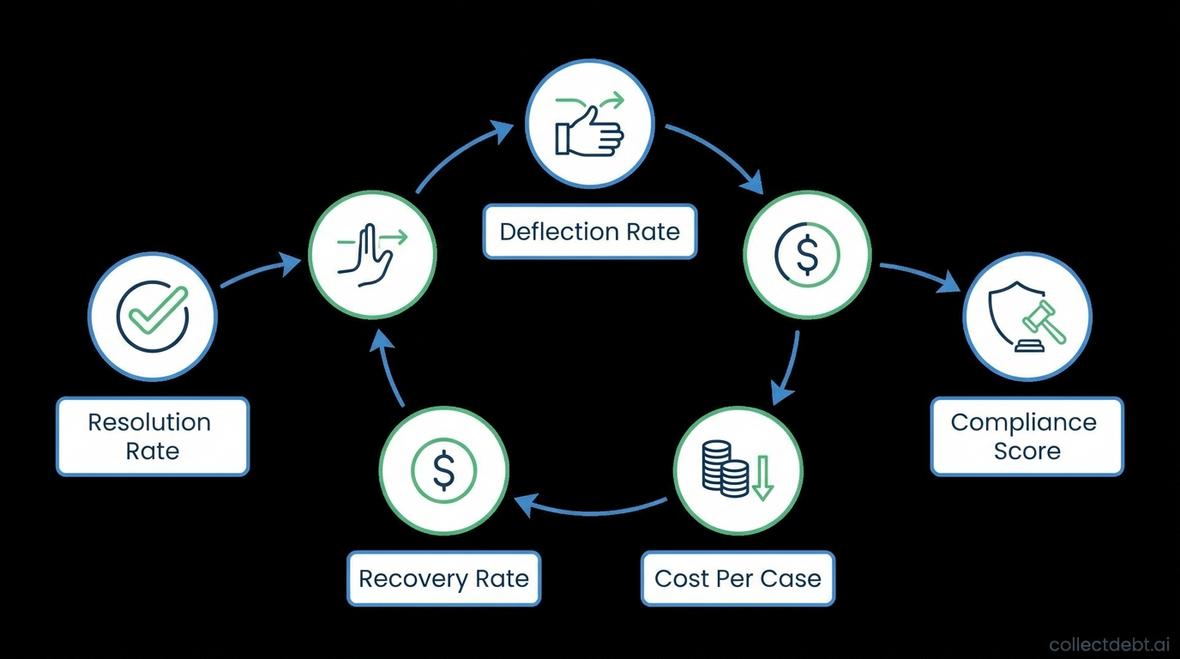
The deflection rate measures the percentage of inquiries successfully resolved by the chatbot without requiring human agent intervention. In debt collection, a high deflection rate indicates that your AI system can handle routine inquiries, payment arrangements, and account information requests autonomously, freeing human agents for complex cases requiring empathy and negotiation skills.
Top-performing collection chatbots achieve deflection rates between 60-80%, though this varies significantly based on case complexity and implementation maturity. Agencies using advanced inbound conversational AI typically see higher deflection rates as the system learns from interactions and improves over time.
Conversation Completion Rate
This critical chatbot KPI tracks the percentage of initiated conversations that reach a defined endpoint whether that's a payment commitment, dispute resolution, or scheduled callback. Low completion rates often indicate friction points in the conversation flow, confusing prompts, or inadequate response handling.
Collection agencies should aim for completion rates above 70%. Analyzing dropout points within conversations reveals where debtors lose interest or encounter obstacles, enabling targeted improvements to conversation design and user experience.
Response Accuracy
Response accuracy measures how often the chatbot provides correct, relevant answers to debtor inquiries. In the highly regulated debt collection environment, inaccurate information can lead to compliance violations, debtor complaints, and damaged recovery prospects.
Maintaining response accuracy above 95% is essential. Regular auditing of chatbot conversations, particularly around complex topics like payment options, dispute procedures, and account details, helps identify areas requiring refinement in the natural language processing models or knowledge base.
Operational Efficiency Indicators
Operational KPIs demonstrate how chatbots impact your agency's resource utilization and cost structure.
Cost Per Case
Cost per case compares the expense of resolving accounts through AI-powered chatbots versus traditional methods. This metric encompasses technology costs, implementation expenses, and ongoing maintenance, divided by the number of cases handled.
Organizations implementing end-to-end collection automation typically report 40-60% reductions in cost per case compared to traditional call center approaches. This dramatic cost savings stems from chatbots' ability to handle unlimited simultaneous conversations, operate 24/7 without additional staffing costs, and scale instantly during high-volume periods.
Average Handling Time
Average handling time (AHT) for chatbot interactions measures the typical duration from conversation initiation to resolution. While longer conversations aren't inherently negative if they result in payment commitments, excessively long interactions may indicate inefficient conversation flows or inadequate automation.
Well-designed collection chatbots handle routine inquiries in 2-4 minutes, while more complex payment negotiations may require 8-12 minutes. Comparing AHT across different interaction types helps identify optimization opportunities and benchmark performance against industry standards.
Contact Rate
Contact rate measures the percentage of outreach attempts that result in actual debtor engagement. For omnichannel support strategies incorporating chatbots across SMS, email, web portals, and social media, tracking contact rates by channel reveals which communication methods debtors prefer.
AI-powered collection systems often achieve contact rates 2-3 times higher than traditional phone-only approaches because they meet debtors on their preferred channels and enable engagement at convenient times rather than during limited call center hours.
Compliance and Quality Scores
In debt collection, regulatory compliance isn't optional it's essential. These chatbot KPIs ensure your AI solution maintains the highest standards of legal and ethical conduct.
Compliance Score
The compliance score represents the percentage of chatbot interactions that fully adhere to regulations like the Fair Debt Collection Practices Act (FDCPA), Telephone Consumer Protection Act (TCPA), and applicable state laws. This includes proper identification, disclosure of rights, prohibition of harassment, and accurate account information.
Leading collection agencies maintain compliance scores above 98%, implementing compliance solutions that automatically flag potential violations, enforce communication time restrictions, and ensure proper documentation of all interactions.
According to the Consumer Financial Protection Bureau, compliance failures can result in penalties ranging from thousands to millions of dollars, making this among the most critical chatbot KPIs for risk management.
Escalation Rate
Escalation rate tracks how often chatbot conversations require transfer to human agents due to complexity, debtor requests, or system limitations. While some escalation is expected and healthy, excessive escalation undermines efficiency gains and may indicate gaps in the chatbot's capabilities or training.
Optimal escalation rates fall between 15-25%, with higher rates suggesting the need for expanded chatbot capabilities or improved conversation design, and lower rates potentially indicating that the system isn't appropriately recognizing situations requiring human judgment.
Sentiment Analysis Scores
Advanced collection chatbots incorporate natural language processing to analyze debtor sentiment throughout conversations, identifying frustration, confusion, or satisfaction. Monitoring sentiment trends helps collections managers understand debtor experience and identify conversations deteriorating toward complaints or compliance risks.
Maintaining positive or neutral sentiment in at least 75% of conversations indicates effective communication strategies. Negative sentiment spikes often correlate with specific conversation topics or bot responses, highlighting areas for improvement.
Financial Performance Measures
Ultimately, collection operations are judged by financial results. These KPIs connect chatbot performance directly to recovery outcomes.
Recovery Rate
Recovery rate measures the percentage of outstanding debt successfully collected through chatbot-facilitated interactions. This core metric directly impacts your agency's revenue and demonstrates the AI system's effectiveness at achieving its primary purpose.
Organizations implementing sophisticated self-service debt resolution capabilities report recovery rate improvements of 15-30% compared to traditional methods. The ability to engage debtors at optimal times, provide convenient payment options, and remove barriers to resolution significantly enhances collection performance.
Promise to Pay Conversion Rate
This chatbot KPI tracks the percentage of chatbot conversations resulting in payment commitments. While not all promises ultimately convert to actual payments, establishing commitments is a critical step in the collection process.
Advanced systems with promise to pay features that offer flexible scheduling, automated reminders, and convenient payment methods achieve conversion rates 20-40% higher than rigid traditional approaches.
Resolution Rate
Resolution rate measures the percentage of cases reaching final disposition whether through payment in full, settlement agreement, dispute resolution, or other definitive outcomes. This metric captures the chatbot's effectiveness at moving cases toward closure rather than leaving them in prolonged limbo.
High-performing collection chatbots achieve resolution rates 25-35% higher than manual processes by maintaining consistent contact, removing payment friction, and providing multiple resolution pathways tailored to individual debtor circumstances.
Revenue Per Conversation
Calculating revenue per conversation divides total collections by the number of chatbot interactions, providing insight into the average financial value generated by each engagement. This metric helps quantify ROI and compare performance across different collection strategies or debtor segments.
Tracking this KPI over time reveals whether optimizations are improving financial outcomes. Successful agencies using generative AI vs traditional debt collection approaches see revenue per conversation increase 30-50% as systems learn optimal engagement strategies.
Debtor Experience Metrics
Positive debtor experiences lead to higher recovery rates, fewer complaints, and better long-term relationships particularly important for first-party collections where maintaining customer relationships matters.
Customer Satisfaction Score (CSAT)
Post-interaction surveys measuring debtor satisfaction provide valuable feedback about chatbot effectiveness, communication quality, and overall experience. While collecting feedback in debt collection contexts can be challenging, voluntary responses often provide the most actionable insights.
Leading collection operations achieve CSAT scores of 70-80% for chatbot interactions significantly higher than traditional collection calls, which often generate negative emotional responses. The less confrontational, more convenient nature of chatbot interactions contributes to improved satisfaction.
Repeat Contact Rate
Repeat contact rate measures how often debtors return to the chatbot for additional interactions. High repeat contact rates can indicate either positive experiences that encourage continued engagement or inadequate first-contact resolution requiring multiple interactions.
Context matters significantly for interpreting this metric. Multiple contacts around payment plan management or account updates may be positive, while repeated contacts asking the same basic questions suggest response quality issues.
Channel Preference and Adoption
When offering omnichannel support, tracking which channels debtors prefer reveals valuable insights about communication strategy effectiveness. Chatbot adoption rates the percentage of debtors choosing digital channels over phone calls indicate market acceptance and solution usability.
Industry data shows that when given the choice, 60-70% of debtors under 45 prefer digital self-service options over speaking with agents, while older demographics show more mixed preferences. Tailoring outreach strategies to demographic preferences optimizes engagement.
Advanced Chatbot KPIs for Sophisticated Operations
Beyond foundational metrics, mature collection operations track advanced KPIs that provide deeper insights into AI performance and optimization opportunities.
Right Party Contact Rate
Right party contact rate measures the percentage of chatbot interactions reaching the actual debtor versus wrong parties, disconnected numbers, or other non-productive contacts. Right party verification capabilities using knowledge-based authentication significantly improve this metric.
Improving right party contact rates from industry averages of 30-40% to 60-70% through AI-powered verification dramatically enhances operational efficiency and compliance posture by reducing inadvertent third-party disclosures.
Containment Rate
The containment rate in debt collections measures the percentage of cases managed entirely through automated channels without any human agent involvement. This metric differs from deflection rate by encompassing the entire collection lifecycle rather than individual interactions.
High containment rates indicate mature AI implementations capable of handling accounts from initial contact through payment collection, achieving the ultimate efficiency goal of fully automated debt resolution for straightforward cases.
Machine Learning Model Accuracy
For agencies using predictive analytics and machine learning to optimize collection strategies, tracking model accuracy how well the AI predicts payment likelihood, optimal contact times, or best communication strategies provides insights into the sophistication and effectiveness of the underlying technology.
Models achieving accuracy rates above 80% for payment propensity predictions enable highly targeted resource allocation, focusing human agent attention on cases requiring specialized handling while automating routine collections.
Implementing Effective Chatbot KPI Tracking
Establishing robust measurement frameworks requires careful planning and the right technology infrastructure.
Dashboard Design and Visualization
Effective KPI tracking requires intuitive dashboards that present complex data in accessible formats for different stakeholder groups. Operations teams need real-time metrics for day-to-day optimization, while executives require high-level summaries demonstrating strategic impact.
Modern collection agency software platforms provide customizable dashboards with drill-down capabilities, enabling users to examine overall performance trends and investigate specific issues or opportunities.
Establishing Benchmarking Standards
Understanding whether your chatbot KPIs represent strong performance requires comparison against relevant benchmarks. These include internal historical performance, industry standards, and competitive alternatives.
Many agencies track improvement trajectories, measuring current performance against pre-implementation baselines to quantify ROI and justify continued investment in AI technology. Industry benchmarks, while sometimes difficult to obtain due to competitive sensitivities, provide valuable context for evaluating relative performance.
Continuous Optimization Cycles
KPI tracking should drive continuous improvement rather than serving as passive reporting. Establishing regular review cycles weekly for operational metrics, monthly for strategic KPIs ensures insights translate into action.
High-performing organizations implement structured optimization processes: identify underperforming metrics, hypothesize improvement strategies, implement changes, measure results, and iterate. This data-driven approach to AI debt collection automation generates compounding performance improvements over time.
Industry-Specific Chatbot KPI Considerations
Different collection verticals prioritize different metrics based on unique operational characteristics and regulatory environments.
Healthcare Collections
For healthcare collections, patient satisfaction metrics carry particular weight given the importance of maintaining positive relationships with individuals who may require future medical services. Empathy indicators and satisfaction scores often receive greater emphasis than in other collection contexts.
Financial Services
In financial services, compliance scores and dispute resolution rates take center stage due to intense regulatory scrutiny and reputational considerations. Financial institutions face significant brand risk from collection complaints, making quality metrics particularly critical.
Auto Finance
For auto finance collections, metrics around payment plan flexibility and cure rates the percentage of delinquent accounts brought current matter most given the focus on loan rehabilitation rather than account closure.
Common Pitfalls in Chatbot KPI Management
Avoiding these frequent mistakes helps maximize the value of your measurement framework.
Focusing on Vanity Metrics
Tracking impressive-sounding but ultimately meaningless metrics total conversations, message volume, or raw engagement numbers without connecting them to business outcomes wastes resources and obscures genuine performance insights. Every chatbot KPI should directly relate to strategic objectives like cost reduction, revenue growth, or risk mitigation.
Ignoring Contextual Factors
KPI interpretation requires understanding external factors that influence performance. Seasonal variations, portfolio composition changes, economic conditions, and regulatory changes all impact metrics. Sophisticated analysis accounts for these variables rather than treating KPIs in isolation.
Insufficient Granularity
Aggregate metrics hide important variations across debtor segments, collection stages, communication channels, and other dimensions. Breaking down KPIs by relevant categories reveals optimization opportunities invisible in overall averages.
Future Trends in Chatbot KPI Evolution
As AI technology advances and collection strategies mature, measurement approaches continue evolving.
Predictive KPIs
Next-generation measurement frameworks incorporate predictive indicators metrics that forecast future performance based on leading indicators rather than reporting past results. For example, early conversation engagement patterns might predict ultimate resolution likelihood, enabling proactive intervention.
Emotional Intelligence Metrics
Advanced natural language processing enables sophisticated emotion detection, measuring not just whether debtors are satisfied but tracking emotional journey throughout collection interactions. Understanding how effectively chatbots navigate emotional complexities provides new dimensions for optimization.
Holistic Value Measurement
Moving beyond individual interaction metrics, leading agencies develop comprehensive value scores that weight multiple KPIs according to strategic importance, creating single measures that capture overall chatbot effectiveness while accounting for the multifaceted nature of collection objectives.
Frequently Asked Questions
What is the most important chatbot KPI for debt collection?
While all KPIs provide value, recovery rate is typically the most critical metric as it directly measures financial performance the ultimate goal of collection operations. However, recovery rate should be balanced with compliance scores to ensure sustainable, legally sound operations.
How often should we review chatbot KPIs?
Operational metrics like deflection rate and contact rate benefit from daily or weekly review to identify immediate issues. Strategic KPIs such as recovery rates and ROI metrics are best evaluated monthly or quarterly to identify meaningful trends beyond short-term fluctuations.
What constitutes a good deflection rate for collection chatbots?
Top-performing collection chatbots achieve deflection rates between 60-80%, though acceptable ranges vary based on case complexity, portfolio characteristics, and implementation maturity. New implementations might start at 40-50% and improve over time as the system learns.
How do chatbot KPIs differ from traditional call center metrics?
While some metrics like contact rate and resolution rate apply to both channels, chatbots enable unique KPIs around 24/7 availability, unlimited scalability, and multi-conversation handling. Additionally, chatbot interactions generate richer data for sentiment analysis and behavioral insights than traditional phone calls.
Can focusing too heavily on KPIs hurt collection performance?
Yes, over-optimization for specific metrics can create unintended consequences. For example, excessive focus on deflection rate might discourage appropriate escalation to human agents, while prioritizing speed could compromise conversation quality. Balanced scorecards considering multiple dimensions prevent this pitfall.
Conclusion
Mastering chatbot KPIs is essential for debt collection agencies seeking to maximize the value of AI-powered automation while maintaining compliance, controlling costs, and delivering positive debtor experiences. By tracking the right metrics across engagement, operational efficiency, compliance, financial performance, and customer experience dimensions, collections leaders gain the insights needed to optimize strategies, demonstrate ROI, and continuously improve outcomes. As AI technology evolves and becomes increasingly central to collection operations, sophisticated KPI frameworks will separate industry leaders from organizations struggling to adapt to the digital transformation reshaping debt recovery.
Ready to Transform Your Collections Process?
See how CollectDebt.ai can help you automate debt collection, reduce costs, and improve compliance.