AI Debt Collection Software: The Complete 2026 Guide To Automated Recovery Solutions
Introduction to AI Debt Collection Software
The debt collection industry is undergoing a fundamental transformation as ai debt collection software replaces traditional call centers and manual outreach methods. Decision-makers in collection agencies and accounts receivable departments face mounting pressure to increase recovery rates while simultaneously reducing operational costs and maintaining strict regulatory compliance. According to the CFPB Debt Collection Complaints and Enforcement Data, the Consumer Financial Protection Bureau received approximately 207,800 debt collection complaints in 2024, nearly double the 109,900 recorded in 2023, demonstrating the critical importance of compliant, technology-driven collection strategies.
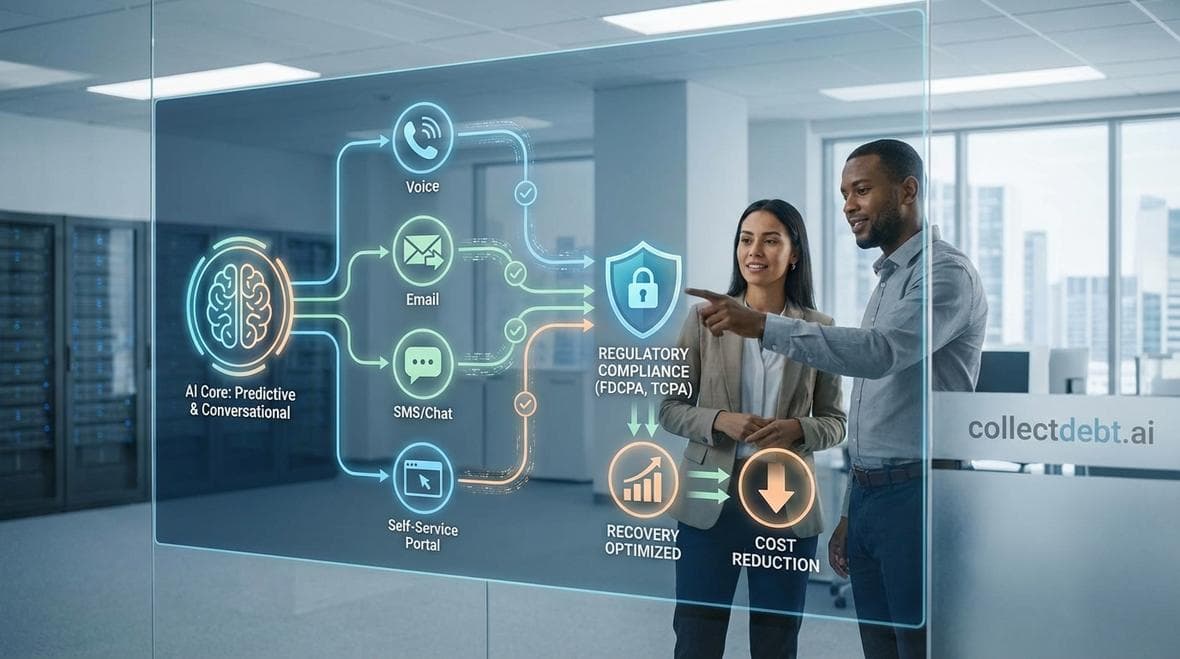
Modern ai debt collection software leverages machine learning, natural language processing, and predictive analytics to automate communication across multiple channels while ensuring adherence to regulations like the Fair Debt Collection Practices Act (FDCPA) and Telephone Consumer Protection Act (TCPA). This comprehensive guide explores how AI-powered collection platforms are reshaping debt recovery operations, delivering measurable ROI, and providing scalable solutions for organizations of all sizes.
What Is AI Debt Collection Software?
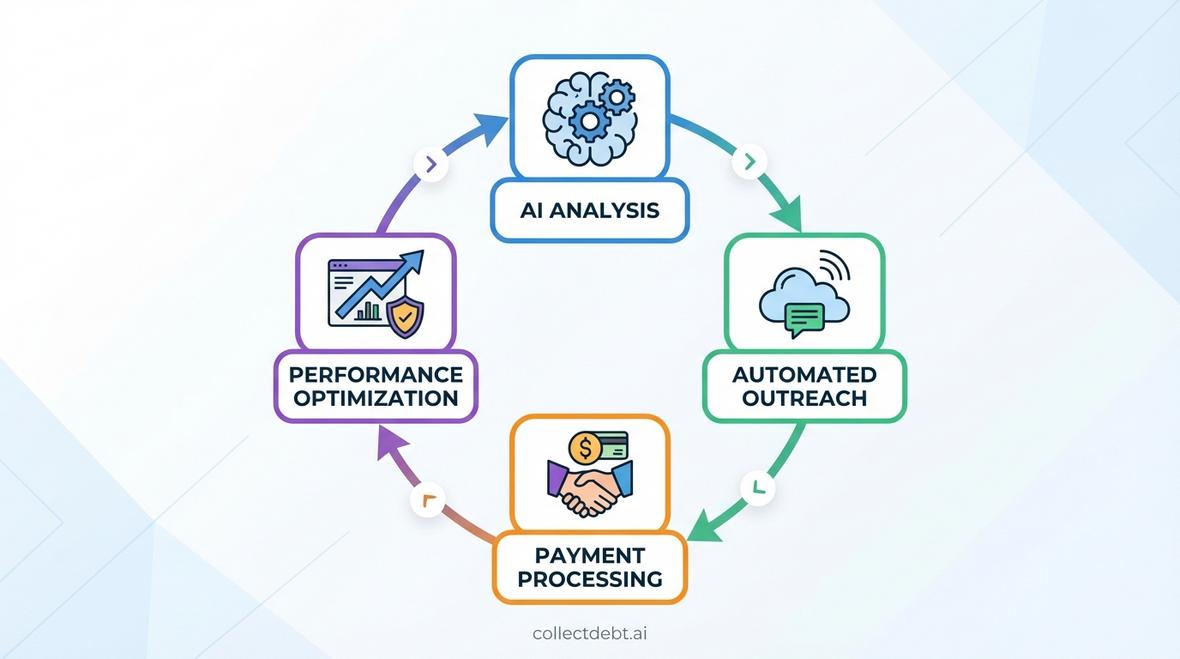
AI debt collection software represents a category of specialized platforms that combine artificial intelligence, automation, and compliance frameworks to manage the entire debt recovery lifecycle. Unlike traditional collection systems that rely heavily on human agents making manual calls, AI-powered solutions orchestrate personalized, omnichannel outreach campaigns that adapt to debtor behavior in real-time.
Core Components of AI Debt Collection Platforms
Enterprise-grade ai debt collection software typically includes several integrated modules working in concert:
- Predictive Analytics Engine: Analyzes historical payment data, demographic information, and behavioral patterns to prioritize accounts by likelihood to pay and recommend optimal contact strategies.
- Conversational AI: Powers intelligent voicebots and chatbots capable of conducting natural, compliant collection conversations across voice, SMS, email, and messaging platforms.
- Compliance Management: Automatically enforces regulatory requirements including consent management, do-not-call list screening, time-zone restrictions, and disclosure requirements.
- Payment Processing: Integrates secure payment gateways enabling debtors to settle accounts through self-service portals, IVR systems, or conversational interfaces.
- Performance Analytics: Provides real-time dashboards tracking recovery rates, contact success metrics, compliance violations, and ROI by campaign, channel, and account segment.
Leading platforms like CollectDebt.ai's AI debt collection solutions orchestrate these components into a unified workflow that reduces manual intervention while improving recovery outcomes.
Essential Features of AI Debt Collection Software
When evaluating ai debt collection software, decision-makers should prioritize platforms offering comprehensive functionality across multiple operational dimensions.
Intelligent Contact Strategy Optimization
Advanced AI systems analyze dozens of variables to determine the optimal time, channel, and message for each debtor interaction. Machine learning models continuously refine contact strategies based on response patterns, improving connection rates by 40-60% compared to static dialing schedules. This intelligent orchestration ensures compliance with calling hour restrictions while maximizing the probability of productive conversations.
Omnichannel Communication Capabilities
Modern debtors expect flexibility in how they engage with collection efforts. Comprehensive ai debt collection software provides seamless experiences across voice calls, SMS text messaging, email, web chat, and mobile applications. Platforms like CollectDebt.ai's omnichannel support maintain conversation continuity across channels, allowing debtors to start a discussion via SMS and complete payment through a web portal without repeating information.
Natural Language Processing and Conversational AI
The most sophisticated ai debt collection software employs large language models to conduct genuinely conversational interactions that feel natural rather than robotic. These systems understand context, respond to objections, negotiate payment arrangements, and handle complex questions without human intervention. Inbound conversational AI capabilities extend this functionality to debtor-initiated contacts, providing 24/7 self-service resolution options that reduce call center volume while improving debtor satisfaction.
Automated Right Party Contact Verification
Regulatory compliance requires confirmation that collection communications reach the actual debtor rather than third parties. Advanced platforms incorporate right party verification using voice biometrics, knowledge-based authentication, and behavioral analysis to confirm identity before discussing account details, reducing wrong-party contact violations and associated regulatory risk.
Self-Service Debt Resolution
Empowering debtors to resolve accounts on their own terms dramatically improves recovery rates while reducing operational costs. Comprehensive self-service debt resolution functionality allows debtors to review account details, dispute inaccuracies, establish payment plans, and submit payments through intuitive interfaces available 24/7 without agent involvement.
Compliance and Regulatory Considerations
Regulatory adherence represents the most critical dimension of ai debt collection software selection. Non-compliance with federal and state regulations can result in substantial fines, class-action lawsuits, and reputational damage that far exceed any operational savings.
FDCPA Compliance Framework
The Fair Debt Collection Practices Act establishes fundamental consumer protections that all collection activities must observe. Enterprise ai debt collection software automates FDCPA compliance through built-in guardrails including automated mini-Miranda disclosures, time-zone-aware calling restrictions, cease-and-desist request processing, and prohibited language filtering. For comprehensive guidance, refer to this FDCPA compliance guide for AI debt collection.
TCPA and Consent Management
The Telephone Consumer Protection Act imposes strict requirements around automated calling, text messaging, and prerecorded voice communications. Compliant platforms maintain detailed consent records, honor do-not-call registrations, implement proper identification protocols, and provide easy opt-out mechanisms across all communication channels. Dedicated compliance solutions ensure organizations maintain defensible documentation of all consent interactions.
State-Level Regulatory Variations
Beyond federal requirements, collection operations must navigate a complex patchwork of state-specific regulations governing licensing, bonding, interest rates, statute of limitations, and communication practices. Leading ai debt collection software incorporates geo-specific rule engines that automatically apply appropriate restrictions based on debtor location, eliminating the operational burden of manual compliance management across multiple jurisdictions.
Industry-Specific Applications of AI Debt Collection Software
Different industries face unique collection challenges requiring specialized approaches. Modern ai debt collection software adapts to sector-specific requirements while maintaining core functionality.
Financial Services Collections
Banks, credit unions, and financial institutions leverage AI collection platforms to recover on credit cards, personal loans, and overdraft balances. Financial services-focused solutions integrate with core banking systems, enforce relationship-based collection strategies that preserve customer lifetime value, and provide sophisticated segmentation for early-stage delinquencies versus charged-off accounts.
Healthcare Revenue Cycle Management
Medical debt collection requires particular sensitivity given the personal nature of healthcare services and complex insurance dynamics. Healthcare-specific ai debt collection software handles patient responsibility balances, navigates insurance claim denials, provides financial assistance screening, and maintains HIPAA-compliant communication protocols throughout the collection process.
Auto Finance and Vehicle Recovery
Auto lenders face unique challenges around collateral management and repossession coordination. Specialized auto finance collection solutions integrate with GPS tracking systems, coordinate voluntary surrender arrangements, calculate payoff amounts including repossession fees, and manage deficiency balance recovery post-sale.
Utilities and Telecommunications
Service providers in utilities and telecom sectors require collection solutions that balance revenue recovery with customer retention for ongoing service relationships. Industry-specific platforms coordinate with service restoration processes, manage payment arrangement compliance, and segment customers by service criticality to prioritize high-value account resolution.
ROI and Performance Metrics
Demonstrating measurable return on investment represents a primary concern for decision-makers evaluating ai debt collection software. Leading implementations deliver quantifiable improvements across multiple performance dimensions.
Recovery Rate Enhancement
Organizations implementing AI-powered collection solutions typically experience 20-35% increases in recovery rates compared to traditional manual methods. This improvement stems from more frequent contact attempts, personalized communication strategies, and 24/7 availability through self-service channels. According to research from Capgemini AI Adoption in Collections: Market Trends, enterprises investing in AI collections technology report significant improvements in right-party contact rates and payment conversion metrics.
Operational Cost Reduction
Automation substantially reduces per-account collection costs by minimizing human agent involvement for routine interactions. Organizations report 40-60% reductions in cost-per-dollar-collected when replacing traditional call centers with ai debt collection software. These savings derive from reduced staffing requirements, lower telecommunications costs through intelligent contact optimization, and decreased compliance violation expenses.
Accelerated Resolution Timelines
AI-powered systems contact debtors more frequently and through more channels than human agents can manage, compressing resolution timelines by 30-45%. Faster resolution reduces charge-off rates, improves cash flow predictability, and minimizes the depreciation in account value that occurs as delinquencies age.
Implementation and Integration Considerations
Successful deployment of ai debt collection software requires careful planning around technical integration, organizational change management, and performance monitoring.
System Integration Architecture
Enterprise collection platforms must integrate with existing technology infrastructure including customer relationship management systems, accounting software, payment gateways, and collection management systems. Modern solutions provide pre-built integrations with major platforms plus flexible APIs for custom connections, ensuring bidirectional data synchronization without manual file transfers.
Data Migration and Account Loading
Moving historical account data, payment history, and communication records into new ai debt collection software requires structured migration planning. Leading vendors provide dedicated implementation support including data mapping, validation testing, and parallel operation periods to ensure continuity during transitions.
Agent Training and Hybrid Workflows
Even highly automated solutions benefit from human agent oversight for complex situations, escalations, and high-value accounts. Successful implementations include comprehensive training programs teaching agents to work alongside AI systems, review automated interaction transcripts, and handle exceptions requiring human judgment.
Future Trends in AI Debt Collection Technology
The ai debt collection software market continues rapid evolution as new capabilities emerge and adoption accelerates across the industry.
Generative AI and Large Language Models
Next-generation platforms leverage generative AI to create truly conversational experiences that adapt messaging in real-time based on debtor responses. These systems generate personalized email content, craft custom payment proposals, and conduct negotiations with nuance previously requiring human collectors.
Advanced Predictive Analytics
Machine learning models increasingly incorporate alternative data sources including utility payment history, employment data, and social media signals to refine propensity-to-pay scoring. These enhanced models enable more precise segmentation and contact strategy optimization, further improving recovery rates while reducing unnecessary contact attempts.
Behavioral Economics Integration
Sophisticated platforms apply behavioral science principles including social proof, commitment devices, and loss aversion framing to motivate payment behavior. Research demonstrates that psychologically-informed messaging can improve payment rates by 15-25% compared to traditional demand letters.
Selecting the Right AI Debt Collection Software Vendor
With numerous vendors offering ai debt collection software, decision-makers should evaluate providers across several critical dimensions:
Proven Compliance Track Record
Vendor compliance history represents the single most important selection criterion. Request detailed information about regulatory violations, consent decree obligations, and litigation history. Established vendors with clean compliance records minimize organizational risk exposure.
Industry-Specific Expertise
Vendors with deep experience in your specific industry understand sector-unique challenges and regulatory requirements. Healthcare collections differ substantially from consumer finance or utility billing, requiring specialized functionality and compliance frameworks.
Scalability and Performance
Ensure prospective platforms can handle your current account volume while supporting anticipated growth. Enterprise-grade ai debt collection software should process millions of accounts, execute concurrent omnichannel campaigns, and maintain performance during peak demand periods without degradation.
Technology Transparency and Explainability
AI-driven decisions affecting consumer communications require clear explanation and audit trails. Select vendors providing transparency into algorithmic decision-making, enabling compliance teams to validate that automated actions align with regulatory requirements and organizational policies.
Frequently Asked Questions
How much does AI debt collection software cost?
Pricing for ai debt collection software varies significantly based on account volume, feature requirements, and deployment model. SaaS platforms typically charge per-account-per-month fees ranging from $0.50 to $3.00 for basic automation, while comprehensive enterprise solutions with advanced AI capabilities command $2.00 to $8.00 per account monthly. Some vendors offer performance-based pricing models charging a percentage of recovered funds, typically 5-15% of collections.
Can AI completely replace human debt collectors?
While ai debt collection software automates the majority of routine collection activities, human agents remain essential for complex negotiations, handling disputes, managing escalations, and providing empathetic support in sensitive situations. The optimal approach combines AI automation for high-volume, straightforward accounts with human expertise for exceptions and high-value cases requiring nuanced judgment.
How does AI ensure regulatory compliance?
Enterprise ai debt collection software embeds compliance guardrails throughout the platform including automated disclosure delivery, time-zone-aware calling restrictions, consent verification, prohibited language filtering, and do-not-call list screening. These systems maintain comprehensive audit logs documenting every consumer interaction, providing defensible compliance records for regulatory examinations.
How long does implementation typically take?
Implementation timelines for ai debt collection software range from 4-8 weeks for straightforward deployments with standard integrations to 3-6 months for complex enterprise implementations requiring extensive customization, multiple system integrations, and phased rollouts across business units or geographic regions.
What systems does AI debt collection software integrate with?
Modern platforms provide pre-built integrations with major collection management systems, CRM platforms, accounting software, payment processors, and communication infrastructure. Additionally, flexible APIs enable custom integrations with proprietary systems, data warehouses, and specialized industry applications ensuring seamless data flow across the technology ecosystem.
Conclusion
The transition to ai debt collection software represents not merely a technology upgrade but a fundamental reimagining of debt recovery operations. Organizations implementing comprehensive AI-powered platforms achieve substantial improvements in recovery rates, operational efficiency, and regulatory compliance while providing debtors with more convenient, respectful resolution options. As regulatory scrutiny intensifies and competitive pressures mount, the strategic adoption of artificial intelligence in collections transitions from competitive advantage to operational necessity. Decision-makers evaluating platforms should prioritize vendors demonstrating proven compliance records, industry-specific expertise, and comprehensive functionality spanning predictive analytics, conversational AI, omnichannel orchestration, and self-service resolution. By selecting the right ai debt collection software partner and executing thoughtful implementation, organizations position themselves to maximize recovery performance while minimizing risk in an increasingly complex regulatory environment.
Ready to Transform Your Collections Process?
See how CollectDebt.ai can help you automate debt collection, reduce costs, and improve compliance.