Cloud Based Debt Collection Software: Complete 2026 Guide To AI-Powered Recovery Solutions
Introduction to Cloud Based Debt Collection Software
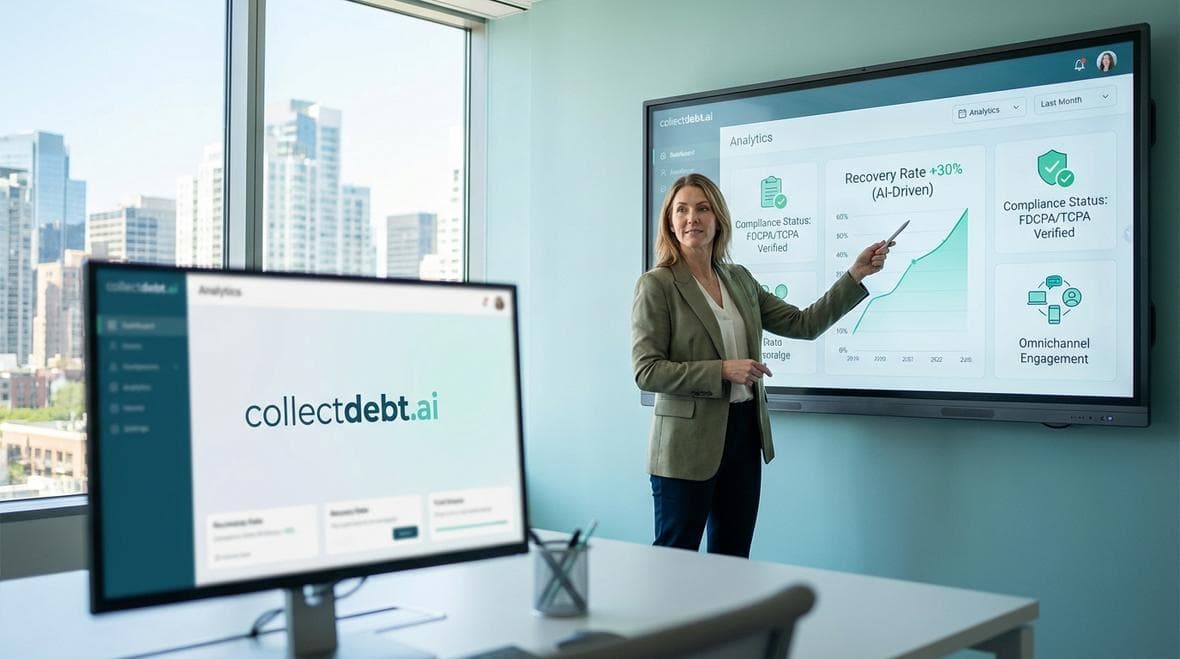
The debt collection industry is undergoing a fundamental transformation as agencies and enterprises move away from legacy on-premise systems toward cloud based debt collection software. This shift is driven by the need for scalability, compliance automation, and cost efficiency in an increasingly regulated environment. For Directors of Operations, Collections Managers, and CFOs managing accounts receivable, cloud platforms offer a strategic advantage by combining AI-powered automation with real-time regulatory updates and multichannel communication capabilities.
Modern cloud based debt collection software enables agencies to automate compliance monitoring under FDCPA and TCPA frameworks while personalizing debtor interactions across email, SMS, voice, and chat. According to Cloud enables automated compliance and audit in debt collection software, cloud platforms provide real-time updates, multichannel integration, and remote access, reducing regulatory risks for collection agencies. This guide explores how cloud-based solutions are revolutionizing debt recovery operations in 2026.
What Is Cloud Based Debt Collection Software?
Cloud based debt collection software refers to web-hosted platforms that manage the entire debt recovery lifecycle from account placement and debtor communication to payment processing and compliance reporting. Unlike traditional on-premise systems that require significant upfront investment in servers and IT infrastructure, cloud solutions operate on a subscription model with pay-as-you-go pricing.
These platforms integrate with existing ERP and CRM systems, enabling seamless data synchronization and workflow automation. Key characteristics include:
- Remote accessibility: Agents can access the system from anywhere with internet connectivity, supporting distributed teams and work-from-home models
- Automatic updates: Compliance rules and software features are updated centrally without manual intervention
- Scalability: Resources scale dynamically based on collection volume, eliminating capacity planning concerns
- Multi-tenant architecture: Shared infrastructure reduces costs while maintaining data isolation and security
Research from Cloud-based segment dominates digital debt collection software market indicates that cloud offers scalability, flexibility, and low upfront costs for SMEs to access advanced tools and integrate with ERP/CRM systems, enhancing efficiency without infrastructure investment.
Key Features of Cloud Based Debt Collection Platforms
When evaluating cloud based debt collection software, decision-makers should prioritize platforms that deliver comprehensive functionality across compliance, communication, and analytics. Leading solutions in 2026 incorporate AI-driven capabilities that were previously available only to large enterprises with substantial technology budgets.
Automated Compliance Management
Regulatory adherence is non-negotiable in debt collection. Cloud platforms embed compliance rules directly into communication workflows, automatically screening for violations before messages are sent. Features include:
- FDCPA and TCPA violation detection algorithms
- Time-zone aware calling restrictions
- Do-not-call list integration and scrubbing
- Automated mini-Miranda disclosures
- Audit trail generation for regulatory reporting
Platforms like collectdebt.ai's compliance solutions provide real-time monitoring and automated documentation, reducing the risk of costly violations and litigation.
Omnichannel Communication Capabilities
Modern debtors expect to interact through their preferred channels. Cloud based debt collection software supports:
- AI-powered voice conversations with natural language understanding
- SMS and email campaigns with personalized messaging
- Web chat and self-service payment portals
- Interactive voice response (IVR) systems with intelligent routing
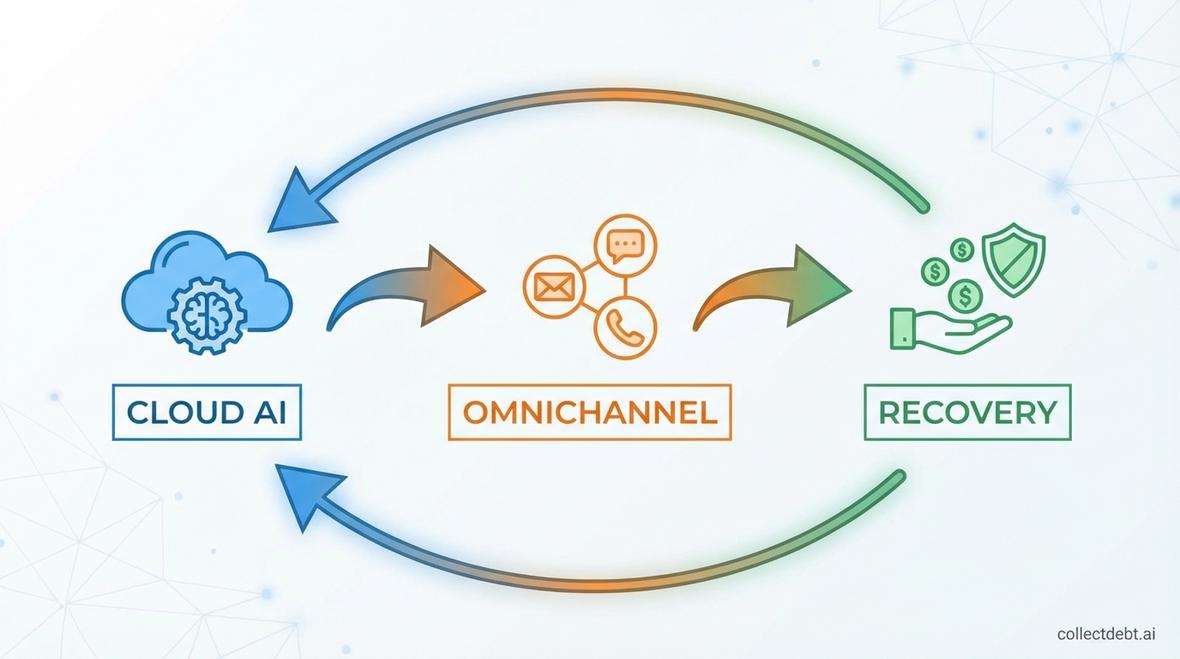
The omnichannel support feature enables agencies to reach debtors where they are most responsive, improving contact rates and reducing operational costs compared to traditional call centers.
AI-Driven Automation and Personalization
Artificial intelligence transforms cloud based debt collection software from a simple CRM into an intelligent recovery engine. Advanced platforms incorporate:
- Predictive dialers that prioritize accounts based on likelihood to pay
- Sentiment analysis to adjust communication tone in real-time
- Payment propensity scoring to optimize offer strategies
- Conversational AI agents that handle routine inquiries autonomously
Agencies implementing AI debt collection solutions typically see 40-60% reductions in manual call volume while maintaining or improving recovery rates.
Integration Ecosystem
Cloud platforms excel at connecting disparate systems. Leading solutions offer pre-built connectors for:
- Core banking systems and loan management platforms
- Payment processors and merchant accounts
- Credit bureaus and skip tracing services
- Workforce management and telephony systems
The integrations offered by collectdebt.ai enable agencies to maintain a single source of truth across their technology stack, eliminating manual data entry and synchronization errors.
Benefits of Cloud Based Debt Collection Software
The transition from on-premise to cloud-based systems delivers measurable operational and financial benefits. Organizations that have made this shift report significant improvements across multiple dimensions.
Reduced Total Cost of Ownership
Cloud based debt collection software eliminates the need for capital expenditures on servers, data centers, and IT staff. The subscription pricing model converts fixed costs to variable costs that scale with business volume. Additional savings come from:
- Elimination of hardware refresh cycles
- Reduced energy and cooling expenses
- Lower software licensing and maintenance fees
- Decreased need for specialized IT personnel
According to SMEs fastest-growing segment in debt collection software due to cloud platforms, affordable cloud tools reduce manual effort, improve communication, and enhance cash flow for growing agencies seeking scalable automation over traditional processes.
Enhanced Security and Disaster Recovery
Leading cloud providers invest heavily in security infrastructure that would be cost-prohibitive for individual agencies. Benefits include:
- 256-bit encryption for data at rest and in transit
- Multi-factor authentication and role-based access controls
- Automated backup and point-in-time recovery
- Geographic redundancy to ensure business continuity
- SOC 2 Type II and PCI-DSS compliance certifications
These enterprise-grade security measures protect sensitive debtor information and ensure operational resilience in the face of cyberattacks or natural disasters.
Improved Recovery Rates and Efficiency
Cloud platforms enable data-driven strategies that optimize recovery outcomes. Agencies report:
- 15-30% increases in right-party contact rates through predictive dialing
- 20-40% reductions in time-to-resolution via automated workflows
- 25-50% decreases in cost per account through AI automation
- 10-20% improvements in overall recovery rates from personalized engagement
The promise-to-pay feature within cloud platforms enables debtors to commit to payment schedules through convenient self-service interfaces, improving fulfillment rates and reducing agent workload.
Scalability for Growth
Cloud infrastructure scales elastically to accommodate business growth without service degradation. Whether processing 1,000 or 1,000,000 accounts, the platform automatically allocates resources to maintain performance. This scalability is particularly valuable for:
- Seasonal volume fluctuations in retail or healthcare collections
- Rapid portfolio acquisitions that double account volume overnight
- Geographic expansion into new markets or jurisdictions
- New channel launches that require additional communication capacity
Cloud vs. On-Premise: Comparative Analysis
While some agencies remain hesitant to transition from familiar on-premise systems, the advantages of cloud based debt collection software have become increasingly compelling. This comparison highlights key decision factors.
Implementation Timeline
On-premise systems typically require 6-12 months for procurement, installation, configuration, and testing. Cloud platforms can be operational in 2-6 weeks, with core functionality available immediately and customizations added incrementally. This rapid deployment enables faster time-to-value and reduces opportunity costs.
Maintenance Burden
On-premise systems place the burden of updates, patches, and regulatory changes on internal IT teams. Every FDCPA amendment or state-level law change requires manual configuration and testing. Cloud providers handle these updates centrally, ensuring all customers benefit from continuous compliance improvements without intervention.
Accessibility and Workforce Flexibility
Remote work has become standard in debt collection operations. Cloud based debt collection software supports distributed teams seamlessly, while on-premise systems require VPN infrastructure and complex security configurations to enable remote access. This flexibility expands talent pools and supports business continuity strategies.
Innovation Velocity
Cloud platforms benefit from continuous development cycles, with new features released monthly or quarterly. On-premise systems typically receive major updates annually, limiting access to cutting-edge capabilities like inbound conversational AI or advanced analytics.
Selecting the Right Cloud Based Debt Collection Software
Choosing the optimal platform requires careful evaluation against organizational requirements and strategic priorities. Decision-makers should assess vendors across these critical dimensions.
Compliance Capabilities
Given the regulatory complexity of debt collection, compliance should be the primary selection criterion. Evaluate whether the platform:
- Automatically updates for federal and state regulatory changes
- Provides configurable business rules for custom compliance policies
- Generates comprehensive audit trails for examinations
- Offers real-time violation alerts and remediation workflows
The FDCPA compliance guide for AI debt collection provides detailed requirements that modern platforms must satisfy.
AI and Automation Depth
Not all AI implementations are created equal. Assess the sophistication of the platform's automation capabilities:
- Natural language processing quality in voice and text interactions
- Machine learning model transparency and explainability
- Ability to handle complex multi-turn conversations
- Integration of payment propensity and behavioral analytics
Platforms offering right-party verification through voice biometrics and identity confirmation reduce misdirected communication and improve debtor experience.
Reporting and Analytics
Data visibility drives operational improvement. Cloud platforms should provide:
- Real-time dashboards with customizable KPIs
- Drill-down capabilities to investigate performance anomalies
- Predictive analytics for portfolio valuation and recovery forecasting
- Role-based reporting for executives, managers, and agents
Comprehensive accounts receivable metrics tracking enables continuous optimization of collection strategies.
Vendor Stability and Support
Cloud platforms represent long-term partnerships. Evaluate vendor credentials including:
- Financial stability and funding history
- Customer retention rates and reference quality
- Support responsiveness and escalation procedures
- Roadmap transparency and customer input mechanisms
Industry-Specific Applications
Cloud based debt collection software adapts to the unique requirements of different collection verticals. Leading platforms offer industry-specific configurations and workflows.
Healthcare Collections
Medical debt collection requires sensitivity to patient circumstances and compliance with HIPAA regulations. Cloud platforms designed for healthcare collections incorporate patient-friendly communication templates, insurance verification workflows, and financial assistance program integration.
Financial Services
Banks and credit unions managing consumer and commercial loan portfolios benefit from platforms with sophisticated segmentation capabilities, regulatory reporting for CFPB examinations, and integration with core banking systems. The financial services solution addresses these specialized requirements.
Utilities and Telecom
High-volume, low-balance collections in the utilities and telecom sector demand automation at scale. Cloud platforms enable cost-effective contact through digital channels while reserving live agent resources for complex accounts.
Auto Finance
Collections on secured auto loans require specialized workflows for repossession management, redemption processing, and deficiency balance handling. Cloud platforms serving auto finance integrate with GPS tracking, auction systems, and DMV databases.
Implementation Best Practices
Successful cloud platform deployments follow structured methodologies that minimize disruption and accelerate value realization. Organizations should adopt these proven practices.
Phased Rollout Approach
Rather than attempting a 'big bang' migration, implement the platform in stages:
- Pilot phase: Deploy to a small team or portfolio segment to validate functionality
- Parallel operation: Run cloud and legacy systems simultaneously to ensure data integrity
- Incremental migration: Move portfolios systematically based on complexity and risk
- Full cutover: Decommission legacy systems once confidence is established
Data Migration Strategy
Historical account data represents critical institutional knowledge. Develop a comprehensive migration plan that:
- Cleanses data to remove duplicates and correct errors
- Maps legacy fields to new platform data structures
- Validates migrated data through automated and manual checks
- Maintains audit trails documenting transformation logic
Change Management and Training
Technology transitions succeed or fail based on user adoption. Invest in:
- Role-specific training curricula with hands-on exercises
- Champions program to identify and empower internal advocates
- Communication campaigns explaining benefits and addressing concerns
- Feedback mechanisms to identify and resolve adoption barriers
Future Trends in Cloud Debt Collection
The evolution of cloud based debt collection software continues to accelerate as new technologies mature and regulatory frameworks adapt. Forward-thinking agencies are preparing for these emerging trends.
Advanced Conversational AI
Next-generation AI agents will handle increasingly complex negotiations, demonstrating empathy and adapting strategies based on debtor responses. These systems will move beyond scripted interactions to truly understand intent and context, approaching human-level conversation quality.
Blockchain for Compliance Verification
Immutable ledgers will provide tamper-proof documentation of all debtor interactions, creating verifiable compliance records that satisfy regulatory requirements and defend against litigation. Smart contracts will automate consent management and payment processing.
Predictive Regulatory Monitoring
AI systems will analyze regulatory proposals and legislative activity to forecast compliance requirements before they take effect, enabling proactive policy adjustments rather than reactive scrambling when new rules are finalized.
Emotion AI and Sentiment Analysis
Real-time emotional intelligence will enable systems to detect stress, frustration, or confusion in debtor communications and adjust approach accordingly. This capability will improve outcomes while reducing complaints and escalations.
Measuring ROI of Cloud Debt Collection Software
Justifying cloud platform investments requires demonstrating tangible financial returns. Calculate ROI using these key metrics:
- Recovery rate improvement: Compare liquidation percentages before and after implementation
- Cost per dollar collected: Track operational expenses relative to total collections
- Time to resolution: Measure average days from placement to resolution
- Compliance violation reduction: Quantify decreases in complaints and regulatory actions
- Agent productivity gains: Compare accounts handled per agent before and after automation
Organizations typically achieve full ROI within 12-18 months of cloud platform deployment, with ongoing operational savings contributing to long-term value creation.
Frequently Asked Questions
Is cloud based debt collection software secure enough for sensitive financial data?
Yes, leading cloud platforms employ enterprise-grade security measures including encryption, multi-factor authentication, and SOC 2 Type II compliance certifications. These protections typically exceed what individual agencies can implement with on-premise systems. Regular third-party audits verify security controls and data protection practices.
How long does it take to implement cloud based debt collection software?
Implementation timelines vary based on portfolio complexity and integration requirements, but most agencies achieve operational status within 2-6 weeks. This includes data migration, user training, and workflow configuration. Phased rollouts may extend over several months as additional features and portfolios are added.
Can cloud platforms handle high-volume automated calling?
Modern cloud based debt collection software scales dynamically to support thousands of simultaneous calls through features like batch calling capabilities. Infrastructure automatically expands during peak periods and contracts during slower times, optimizing both performance and cost.
What happens if the cloud provider experiences an outage?
Reputable providers maintain 99.9% uptime through redundant infrastructure across multiple geographic regions. In the rare event of service disruption, automated failover systems restore operations within minutes. Service level agreements specify maximum downtime and compensation for violations.
How does cloud based debt collection software ensure FDCPA compliance?
Platforms embed compliance rules directly into communication workflows, automatically screening for violations before messages are sent. Features include time-zone restrictions, DNC list scrubbing, disclosure requirements, and comprehensive audit trails. Updates are deployed centrally when regulations change, ensuring continuous compliance.
Conclusion
Cloud based debt collection software has evolved from a novel concept to an operational imperative for agencies seeking to maximize recovery rates while controlling costs and maintaining compliance. The combination of AI-powered automation, omnichannel communication, and real-time regulatory updates delivers measurable improvements across all performance dimensions. As the industry continues its digital transformation, organizations that embrace cloud platforms position themselves for sustained competitive advantage in an increasingly complex regulatory and technological landscape. Decision-makers evaluating solutions should prioritize vendors offering comprehensive compliance automation, sophisticated AI capabilities, and robust integration ecosystems. The transition to cloud-based operations represents not merely a technology upgrade, but a fundamental reimagining of how debt collection can operate more efficiently, ethically, and effectively in 2026 and beyond.
Ready to Transform Your Collections Process?
See how CollectDebt.ai can help you automate debt collection, reduce costs, and improve compliance.