A/R Report Example: Complete Guide To Accounts Receivable Reporting For 2026

Understanding A/R Reports: The Foundation of Effective Collections
An A/R report example serves as the cornerstone for any debt collection agency or accounts receivable department seeking to optimize cash flow and recovery rates. In 2026, with US household debt reaching $18.04 trillion in Q4 2024, the importance of accurate and actionable accounts receivable reporting has never been more critical. These reports provide decision-makers with the visibility needed to identify aging accounts, prioritize collection efforts, and maintain regulatory compliance across increasingly complex regulatory landscapes.
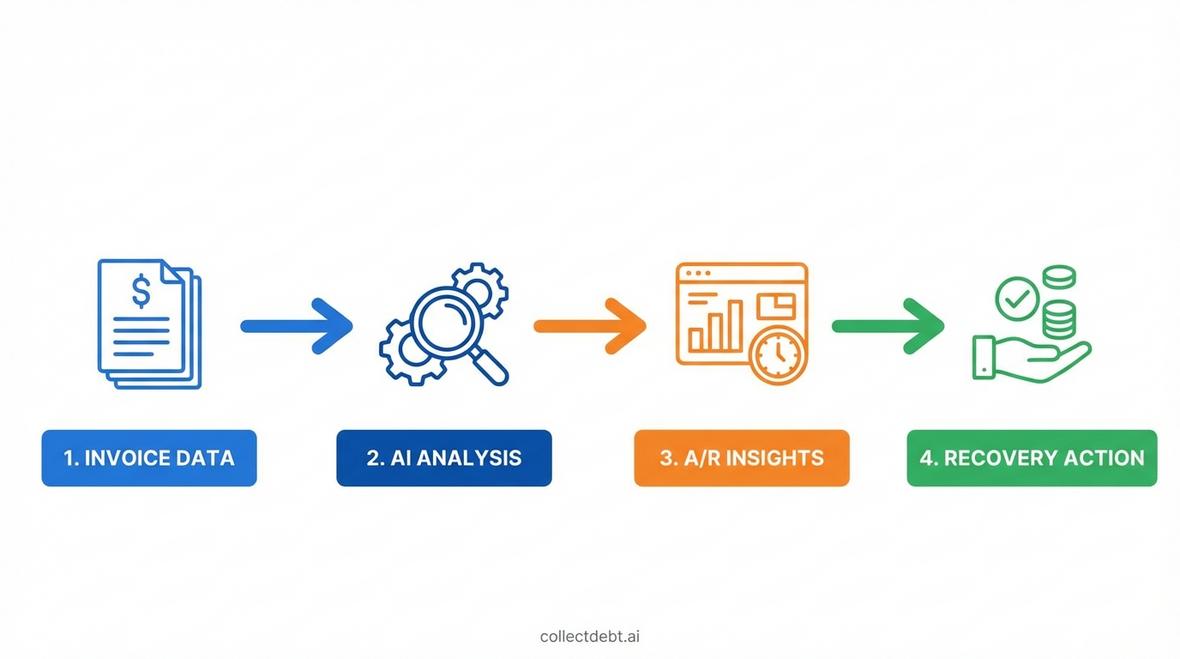
An accounts receivable report is a comprehensive financial document that tracks outstanding invoices, payment timelines, customer payment behaviors, and the overall health of an organization's receivables portfolio. For Collections Managers and CFOs, these reports translate raw data into strategic intelligence that drives operational decisions, resource allocation, and recovery strategies. The evolution of AI-powered accounts receivable solutions has transformed traditional static reports into dynamic, predictive tools that enable proactive debt management rather than reactive collection efforts.
Essential Components of an Effective A/R Report Example
A comprehensive a r report example must include several critical components to deliver actionable insights for debt collection professionals. Understanding these elements helps Directors of Operations and Collections Managers extract maximum value from their reporting infrastructure.
Aging Schedule Breakdown
The aging schedule represents the most fundamental component of any accounts receivable report. This section categorizes outstanding invoices by the length of time they have remained unpaid, typically segmented into 30-day increments: current, 1-30 days, 31-60 days, 61-90 days, and 90+ days. Each aging bucket provides insight into collection urgency and risk levels, with older accounts generally representing higher default probability.
According to Federal Reserve G.19 data on consumer credit delinquency rates, tracking these aging patterns against industry benchmarks enables AR managers to identify problematic trends before they escalate. Modern AI-powered platforms like CollectDebt.ai's AI debt collection solution automatically prioritize accounts based on aging data combined with payment behavior analytics.
Customer Payment History and Behavior Patterns
Beyond simple aging data, effective A/R reports must include detailed customer payment history showing past payment patterns, promise-to-pay fulfillment rates, and communication response behaviors. This historical context enables collection teams to personalize their outreach strategies and predict which accounts are most likely to self-cure versus those requiring intensive intervention.
For agencies managing large portfolios, segmenting customers by payment behavior creates operational efficiency. High-performing promise-to-pay systems track commitment fulfillment rates as a key metric within A/R reporting frameworks.
Days Sales Outstanding (DSO) Metrics
Days Sales Outstanding represents the average number of days required to collect payment after a sale has been made. This critical KPI appears prominently in any comprehensive a r report example and provides a single metric for executive leadership to assess collection efficiency. The formula calculates DSO by dividing accounts receivable by total credit sales, then multiplying by the number of days in the period.
Industry benchmarks vary significantly across sectors, with healthcare typically experiencing DSO ranges of 45-60 days, while retail operations often target 30-40 days. Tracking DSO trends over time reveals whether collection efforts are improving or deteriorating. For detailed guidance on optimizing these metrics, refer to our comprehensive resource on accounts receivable metrics for 2026.
Collection Effectiveness Index (CEI)
The Collection Effectiveness Index measures the quality of collection efforts during a specific period. This metric appears in advanced A/R report examples and is calculated by dividing the sum of beginning receivables plus credit sales minus ending receivables by the sum of beginning receivables plus credit sales minus ending current receivables, then multiplying by 100. A CEI score of 100% indicates perfect collection performance, while lower scores reveal collection inefficiencies.
Practical A/R Report Examples by Industry
Different industries require tailored approaches to accounts receivable reporting based on their unique operational characteristics, regulatory environments, and customer payment behaviors.
Healthcare A/R Reporting Example
Healthcare organizations face unique challenges in accounts receivable management, including insurance claim processing, patient responsibility portions, and complex regulatory requirements under HIPAA. A healthcare-focused a r report example must segment receivables by payer type: commercial insurance, Medicare/Medicaid, and patient self-pay portions.
The report should track claim denial rates, appeal success rates, and average time-to-payment by insurance carrier. For self-pay accounts, implementing specialized healthcare collection automation improves recovery rates while maintaining patient satisfaction. Healthcare A/R reports typically include metrics such as net collection rate (cash collected divided by total charges minus contractual adjustments) and clean claim rate (percentage of claims paid on first submission).
Financial Services A/R Reporting Example
Financial services organizations, including banks, credit unions, and lending institutions, require A/R reporting that emphasizes regulatory compliance and risk management. These reports must demonstrate adherence to FDCPA, TCPA, and CFPB regulations while tracking collection performance across diverse loan portfolios.
With CFPB FDCPA complaints nearly doubling to 207,800 in 2024, compliance tracking within A/R reports has become non-negotiable. Financial services A/R reports should include compliance metrics such as call attempt frequency, communication time restrictions, and documentation of consumer disputes. Organizations in this sector benefit from industry-specific financial services collection solutions that embed compliance guardrails directly into the collection workflow.
Retail and E-Commerce A/R Reporting Example
Retail organizations managing credit programs or B2B wholesale operations require A/R reports that emphasize high-volume, low-dollar accounts with rapid turnover cycles. These reports focus on collection velocity, contact rate optimization, and self-service payment adoption.
A retail-focused a r report example should segment accounts by purchase channel (online versus in-store), payment method, and customer lifetime value. For retailers implementing AI-powered retail collection strategies, the report should track digital engagement metrics including SMS response rates, payment portal utilization, and automated payment plan enrollment rates.
Advanced A/R Reporting: Predictive Analytics and AI Integration
The evolution from descriptive to predictive accounts receivable reporting represents a fundamental shift in how collection agencies and AR departments operate. Traditional a r report examples focused exclusively on historical data, while modern AI-enhanced reports incorporate predictive modeling to forecast future payment behaviors and optimal collection strategies.
Predictive Scoring Models in A/R Reports
Advanced A/R reporting platforms now incorporate machine learning algorithms that assign propensity-to-pay scores to individual accounts based on historical payment patterns, demographic data, economic indicators, and engagement behaviors. These scores appear directly within the A/R report, enabling collection teams to prioritize outreach efforts toward accounts with the highest probability of payment.
Implementing end-to-end AI collection platforms enables automatic score recalculation as new data points emerge, ensuring collection strategies adapt in real-time to changing account conditions. This dynamic approach significantly outperforms static prioritization methods based solely on balance or aging category.
Channel Optimization Reporting
Modern consumers respond differently to various communication channels, making channel performance a critical component of comprehensive A/R reporting. An advanced a r report example should include detailed breakdowns of contact rates, response rates, and payment rates by communication channel: voice calls, SMS, email, and digital portals.
Organizations leveraging omnichannel support infrastructure can track customer preferences and automatically route future communications through the most effective channels for each individual debtor. This data-driven approach improves both efficiency and debtor experience while reducing operational costs associated with unsuccessful contact attempts.
Regulatory Compliance Documentation in A/R Reports
For debt collection agencies and enterprise AR departments, compliance documentation represents both a legal necessity and an operational imperative. Comprehensive a r report examples must include detailed compliance metrics that demonstrate adherence to federal and state regulations governing consumer debt collection practices.
FDCPA Compliance Metrics
The Fair Debt Collection Practices Act establishes strict guidelines for collection communications, including prohibited practices, required disclosures, and consumer dispute procedures. A/R reports must document compliance with these requirements through metrics such as: call time distribution showing adherence to 8am-9pm restrictions, dispute resolution timelines, cease-and-desist request acknowledgment rates, and validation notice delivery confirmation.
With regulatory scrutiny intensifying, implementing AI-powered compliance monitoring solutions ensures every collection interaction adheres to legal requirements while automatically documenting compliance within A/R reporting frameworks. For detailed guidance on maintaining regulatory adherence, reference our comprehensive FDCPA compliance guide for AI debt collection.
TCPA Compliance Tracking
The Telephone Consumer Protection Act governs automated calling systems, prerecorded messages, and SMS communications. A/R reports must demonstrate consent documentation for automated outreach, including opt-in timestamps, consent language versions, and revocation acknowledgments. Collection organizations utilizing automated calling systems must maintain detailed records of calling patterns, abandoned call rates, and manual intervention frequencies to demonstrate TCPA compliance.
Implementing Effective A/R Reporting Systems
Transitioning from manual, spreadsheet-based A/R reporting to automated, AI-enhanced systems requires strategic planning and careful implementation. Organizations seeking to modernize their reporting infrastructure should follow a structured approach that balances technological capabilities with operational requirements.
Data Integration Requirements
Effective A/R reporting requires seamless integration between multiple data sources: accounting systems, customer relationship management platforms, payment processors, and communication tracking tools. Modern collection platforms offer comprehensive integration capabilities that automatically aggregate data from disparate systems into unified reporting dashboards.
API-based integrations enable real-time data synchronization, ensuring A/R reports reflect current account statuses rather than outdated snapshots. This connectivity allows collections teams to make informed decisions based on the most recent payment activities, communication outcomes, and account status changes.
Customization and Flexibility
While standard a r report examples provide valuable templates, each organization requires customization to address its unique operational requirements, industry-specific metrics, and stakeholder information needs. Effective reporting platforms offer configurable dashboards that enable users to create custom views focusing on the metrics most relevant to their roles.
Collections agents require granular, account-level detail with actionable next steps, while CFOs need high-level summary metrics showing overall portfolio health and trend analysis. Modern platforms accommodate these varying requirements through role-based reporting configurations that deliver appropriate detail levels to each stakeholder group.
Measuring ROI of Advanced A/R Reporting Systems
Investing in sophisticated A/R reporting infrastructure delivers measurable returns through improved collection rates, reduced operational costs, and enhanced compliance postures. Quantifying these benefits enables Collections Managers and CFOs to justify technology investments and demonstrate value to executive stakeholders.
Collection Rate Improvements
Organizations implementing AI-powered reporting and automation typically experience 15-35% improvements in collection rates compared to traditional manual approaches. These gains result from better account prioritization, optimized communication timing, and personalized engagement strategies informed by predictive analytics embedded within modern A/R reporting systems.
For detailed analysis of ROI expectations, review our comparative study on generative AI versus traditional debt collection ROI, which quantifies performance improvements across multiple operational metrics.
Operational Efficiency Gains
Automated A/R reporting eliminates hundreds of hours previously spent on manual data compilation, spreadsheet manipulation, and report generation. This efficiency enables collection teams to redirect resources from administrative tasks toward direct debtor engagement and relationship management activities that drive payment outcomes.
Additionally, AI-powered platforms incorporating automated batch calling capabilities can process thousands of accounts simultaneously while automatically updating A/R reports with outcome data, creating a continuous improvement cycle that manual systems cannot replicate.
Future Trends in A/R Reporting for 2026 and Beyond
The accounts receivable reporting landscape continues evolving rapidly as artificial intelligence, machine learning, and advanced analytics capabilities mature. Forward-thinking organizations are already implementing next-generation reporting features that will become industry standards over the coming years.
Real-Time Predictive Reporting
Traditional A/R reports provide historical snapshots with limited forward-looking insights. Emerging platforms now offer real-time predictive reporting that continuously updates payment probability forecasts, optimal contact timing recommendations, and portfolio performance projections. These systems analyze thousands of data points across current accounts and historical patterns to generate actionable predictions that guide collection strategy in real-time.
Natural Language Reporting Interfaces
The next generation of A/R reporting systems will incorporate natural language processing capabilities that allow users to query reporting systems using conversational language rather than navigating complex dashboard interfaces. Collections Managers will be able to ask questions like 'Show me all accounts over 60 days with broken payment promises in the healthcare vertical' and receive instant, customized reports addressing that specific inquiry.
Frequently Asked Questions About A/R Reports
How frequently should A/R reports be generated?
Most organizations generate comprehensive A/R reports monthly for executive review and financial reporting purposes, with weekly or daily summary reports for operational management. Advanced AI platforms provide real-time dashboard access, eliminating fixed reporting cycles in favor of continuous monitoring.
What are typical industry benchmarks for A/R metrics?
Benchmarks vary significantly by industry, but general targets include DSO under 45 days, collection effectiveness index above 80%, and aging concentration with less than 15% of receivables beyond 60 days. Industry-specific benchmarks should be referenced for accurate performance assessment.
Can A/R reporting be fully automated?
Modern platforms can automate the vast majority of A/R reporting processes, including data aggregation, metric calculation, visualization generation, and scheduled distribution. However, strategic interpretation and action planning still require human expertise, particularly for complex or unusual account situations.
What A/R reporting capabilities do small collection agencies need?
Small agencies should prioritize aging schedule tracking, contact attempt documentation, compliance metrics, and basic performance indicators like collection rate and DSO. As operations scale, more sophisticated predictive analytics and channel optimization reporting become valuable additions.
Conclusion
Effective accounts receivable reporting serves as the operational backbone for modern debt collection agencies and enterprise AR departments navigating increasingly complex regulatory environments while managing record debt levels. A comprehensive a r report example extends far beyond simple aging schedules to incorporate predictive analytics, compliance documentation, channel optimization data, and real-time performance metrics that enable proactive decision-making. As artificial intelligence continues transforming the collections industry, organizations that invest in sophisticated reporting infrastructure position themselves to maximize recovery rates, minimize operational costs, and maintain regulatory compliance across all collection activities. The evolution from static historical reports to dynamic predictive intelligence represents not merely a technological upgrade but a fundamental shift in how successful organizations approach debt recovery in 2026 and beyond.
Ready to Transform Your Collections Process?
See how CollectDebt.ai can help you automate debt collection, reduce costs, and improve compliance.