AI Voice Bot For Debt Collection: Complete 2026 Guide To Automated Recovery Solutions

Introduction to AI Voice Bots in Debt Collection
The debt collection industry stands at a critical inflection point. Traditional call centers struggle with high operational costs, compliance risks, and inconsistent recovery rates. Enter the AI voice bot for debt collection—a transformative technology that's reshaping how agencies and enterprises approach accounts receivable management. These intelligent systems leverage natural language processing, machine learning, and conversational AI to automate debtor interactions while maintaining regulatory compliance and improving collection outcomes.
For Directors of Operations, Collections Managers, and CFOs, understanding how AI voice bots function and their strategic implementation has become essential. This comprehensive guide explores the technology, regulatory considerations, ROI metrics, and best practices for deploying AI voice bot for debt collection solutions in 2026.
What Is an AI Voice Bot for Debt Collection?
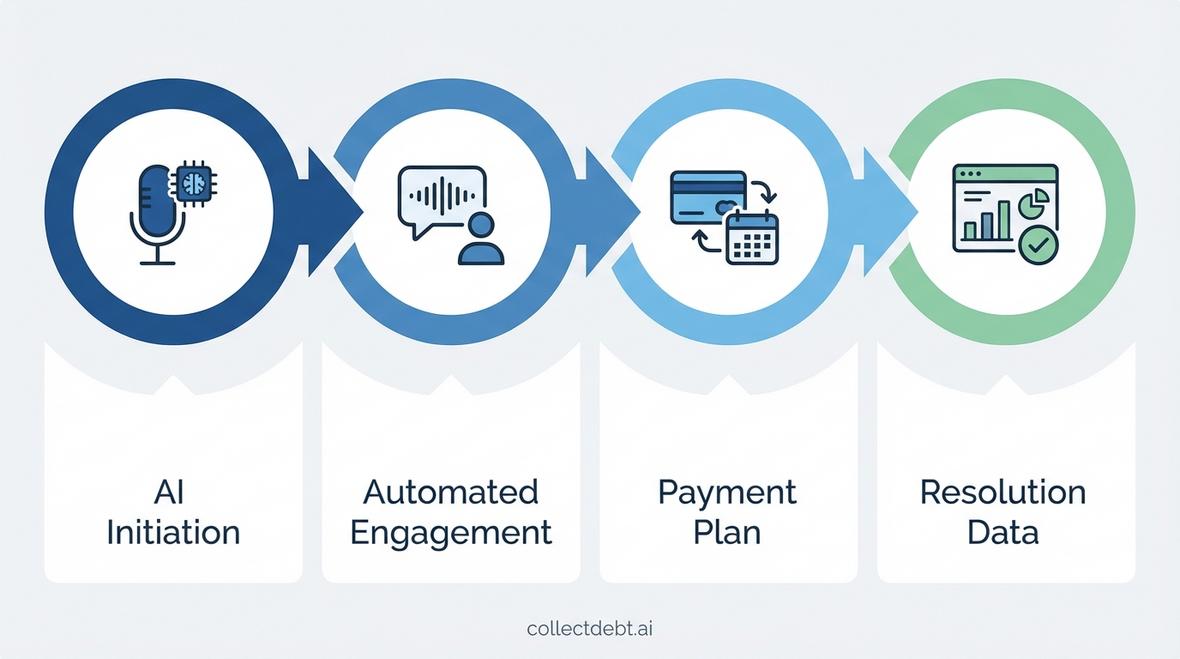
An AI voice bot for debt collection is an autonomous conversational agent designed to initiate, manage, and complete debt collection interactions through voice channels. Unlike traditional Interactive Voice Response (IVR) systems that follow rigid menu structures, modern AI voice bots use advanced natural language understanding to conduct dynamic, context-aware conversations with debtors.
Core Components of AI Voice Bot Technology
The architecture of an effective AI voice bot for debt collection includes several integrated components:
- Automatic Speech Recognition (ASR): Converts debtor speech into text with industry-leading accuracy rates exceeding 95% in optimal conditions
- Natural Language Processing (NLP): Interprets intent, sentiment, and meaning from debtor responses
- Dialog Management: Orchestrates conversation flow based on compliance rules and collection strategies
- Text-to-Speech (TTS): Generates natural-sounding voice output with appropriate tone and pacing
- Integration Layer: Connects with collection management systems, payment processors, and CRM platforms
These components work together to create seamless interactions that feel natural while adhering to strict regulatory frameworks like the FDCPA compliance requirements.
Strategic Benefits of AI Voice Bots for Debt Collection
Organizations implementing AI voice bot for debt collection solutions report significant operational and financial advantages across multiple dimensions.
Operational Cost Reduction
Traditional collection call centers face labor costs ranging from $35,000 to $55,000 annually per full-time equivalent agent, excluding overhead, training, and technology expenses. AI voice bots can handle thousands of concurrent calls at a fraction of this cost, with some organizations reporting 60-75% reduction in per-contact costs after full implementation.
The scalability advantage becomes particularly pronounced during peak collection periods. While human-staffed operations require months to recruit and train additional agents, AI debt collection solutions scale instantly to accommodate volume fluctuations.
Enhanced Recovery Performance
According to Forrester AI market penetration in finance, organizations using AI voice solutions achieve 25% higher efficiency in collections compared to traditional methods. This improvement stems from several factors:
- Optimal Contact Timing: AI systems analyze debtor behavior patterns to identify the most effective contact windows
- Personalized Approach: Machine learning algorithms tailor conversation strategies based on debtor profiles and historical response data
- Consistency: Every interaction follows proven best practices without variation due to agent fatigue or skill gaps
- Immediate Follow-up: Automated systems execute promised callbacks and payment reminders with perfect reliability
Regulatory Compliance and Risk Mitigation
Compliance violations carry severe consequences the Consumer Financial Protection Bureau has levied fines exceeding $100 million against collection agencies for FDCPA violations in recent years. AI voice bots for debt collection offer inherent compliance advantages:
- Every conversation is recorded and transcribed for quality assurance and audit purposes
- Pre-programmed guardrails prevent prohibited language, threats, or harassment
- Automated tracking ensures adherence to contact frequency limitations
- Real-time verification of debtor identity through right party verification protocols
Organizations can explore comprehensive compliance solutions that integrate regulatory requirements directly into the conversation engine.
Key Implementation Considerations for Decision-Makers
Successful deployment of an AI voice bot for debt collection requires strategic planning across multiple dimensions.
System Integration and Data Architecture
The effectiveness of AI voice bots depends heavily on seamless integration with existing technology infrastructure. Collections managers should evaluate platforms based on their ability to connect with:
- Collection Management Systems (CMS) for account data synchronization
- Payment gateways for real-time transaction processing
- Customer Relationship Management (CRM) platforms for holistic debtor profiles
- Compliance monitoring tools for regulatory oversight
Modern platforms offer extensive integration capabilities through API-first architectures that minimize implementation friction.
Conversation Design and Strategy
The quality of debtor interactions depends on thoughtful conversation design that balances collection objectives with empathetic communication. Effective AI voice bot for debt collection implementations include:
- Graduated Escalation Paths: Starting with gentle reminders and progressively increasing urgency based on response patterns
- Payment Flexibility: Offering self-service options for promise to pay arrangements and installment plans
- Empathy Markers: Language patterns that acknowledge debtor circumstances while maintaining professional boundaries
- Objection Handling: Pre-programmed responses to common debtor objections and dispute claims
Omnichannel Orchestration
While voice remains a primary channel, optimal collection strategies employ coordinated multi-channel approaches. Leading organizations integrate voice bots with SMS, email, and digital self-service portals through omnichannel support systems that maintain conversation continuity across touchpoints.
This approach recognizes debtor channel preferences younger demographics often prefer text-based communication, while older segments respond better to voice interactions. AI systems can adapt channel selection based on debtor engagement patterns.
AI Voice Bots vs. Human Collectors: Performance Analysis
Understanding the comparative strengths and limitations of AI versus human collectors helps organizations optimize their collection workforce strategy.
Comparative Performance Metrics
Research from Yale SOM research on AI vs human debt collectors reveals nuanced performance differences. The study found that people are less likely to follow through on debt repayment commitments made to AI compared to humans, with AI interactions resulting in 5% lower repayment of overdue balances after one year.
However, this finding requires contextual interpretation. The research focused on promise-to-pay adherence rather than overall collection effectiveness. When considering total contact volume, cost efficiency, and scalability, AI systems often demonstrate superior ROI despite slightly lower commitment fulfillment rates.
The Hybrid Collection Model
Forward-thinking organizations are adopting hybrid models that leverage both AI and human capabilities:
- AI for Early-Stage Collections: Automated voice bots handle initial contact attempts, payment reminders, and simple arrangements
- Human Escalation: Complex cases, high-value accounts, and debtors requesting human interaction are routed to experienced collectors
- AI-Assisted Collections: Human agents use AI-powered tools for real-time coaching, sentiment analysis, and next-best-action recommendations
This approach optimizes resource allocation while maintaining the relationship-building capacity that humans uniquely provide for challenging collection scenarios.
Industry-Specific Applications of AI Voice Bots
Different sectors face unique collection challenges that require tailored AI voice bot implementations.
Healthcare Revenue Cycle Management
Medical debt collection presents unique challenges including patient sensitivity, complex payment arrangements, and insurance coordination. Healthcare-focused AI voice bots address these through:
- HIPAA-compliant communication protocols
- Insurance verification and coordination of benefits discussions
- Financial assistance program enrollment support
- Flexible payment plan negotiations sensitive to patient financial hardship
Auto Finance and Transportation
The auto finance sector benefits significantly from AI voice bot deployment, particularly for deficiency balance recovery and pre-charge-off intervention. Auto finance collections leverage AI for:
- Early delinquency intervention to prevent repossession
- Post-repossession deficiency balance recovery
- Payment extension and modification negotiations
- Vehicle location assistance coordination
Utilities and Telecommunications
High-volume, low-balance collections in the utilities and telecom sectors represent ideal use cases for AI voice bots. The technology efficiently handles:
- Disconnect notification and payment arrangement offers
- Service restoration coordination following payment
- Recurring billing dispute resolution
- Automated payment plan enrollment and management
ROI and Financial Impact Analysis
CFOs and financial decision-makers require concrete ROI projections to justify AI voice bot investments.
Cost-Benefit Analysis Framework
A comprehensive ROI analysis for AI voice bot for debt collection implementations should account for:
Implementation Costs:
- Platform licensing fees (typically $5,000-$25,000 monthly depending on volume)
- Integration and customization expenses ($20,000-$100,000 one-time)
- Training and change management investment
- Ongoing optimization and support resources
Quantifiable Benefits:
- Direct labor cost reduction from call center downsizing or reallocation
- Increased liquidation rates driving higher cash collections
- Reduced compliance violation risk and associated penalties
- Improved debtor experience leading to lower complaint rates
Organizations can explore detailed ROI comparisons through resources like generative AI vs traditional debt collection ROI analysis.
Expected Payback Periods
Most organizations implementing AI voice bot for debt collection solutions report payback periods between 6-18 months, with larger operations achieving faster returns due to economies of scale. The key variables influencing payback timeline include:
- Portfolio size and monthly placement volume
- Current operational cost structure and efficiency
- Integration complexity with existing systems
- Incremental recovery rate improvement achieved
Selecting the Right AI Voice Bot Platform
The market offers numerous AI voice bot for debt collection platforms with varying capabilities, pricing models, and specialization levels.
Critical Evaluation Criteria
Collections managers should assess potential platforms across these dimensions:
- Regulatory Expertise: Built-in compliance for FDCPA, TCPA, and state-specific regulations
- Conversation Quality: Natural language capabilities that create authentic, empathetic interactions
- Integration Flexibility: API availability and pre-built connectors for common collection systems
- Analytics and Reporting: Comprehensive dashboards for performance monitoring and optimization
- Scalability: Ability to handle volume fluctuations without performance degradation
Platform Comparison Resources
Organizations benefit from detailed platform comparisons that highlight feature differences and pricing structures. Resources like Retell vs CollectDebt comparison provide side-by-side analyses of leading solutions.
Future Trends in AI Voice Bot Technology
The AI voice bot for debt collection landscape continues evolving rapidly with several emerging trends shaping the future.
Advanced Emotional Intelligence
Next-generation AI voice bots incorporate sophisticated sentiment analysis that detects debtor emotional states in real-time, adjusting conversation approach accordingly. This capability enables more empathetic interactions that balance collection objectives with debtor experience.
Predictive Contact Strategy
Machine learning models increasingly predict optimal contact timing, channel preference, and negotiation strategies for individual debtors based on historical patterns and demographic signals. This precision targeting significantly improves contact rates and conversion efficiency.
Multilingual and Dialect Support
As collection portfolios become more diverse, AI voice bots with native multilingual capabilities eliminate language barriers that traditionally required specialized agent hiring. Modern platforms support dozens of languages with culturally appropriate conversation patterns.
Frequently Asked Questions
Are AI voice bots compliant with FDCPA and TCPA regulations?
Yes, properly configured AI voice bot for debt collection systems can achieve full FDCPA and TCPA compliance. Leading platforms include built-in guardrails that prevent prohibited practices, maintain required disclosures, and document all interactions for audit purposes. However, organizations remain ultimately responsible for ensuring their specific implementation adheres to all applicable regulations.
Will AI voice bots completely replace human collectors?
The evidence suggests AI voice bots will augment rather than completely replace human collectors. While automation handles high-volume, routine interactions efficiently, human expertise remains valuable for complex negotiations, relationship building with high-value accounts, and cases requiring nuanced judgment. The optimal approach combines both capabilities strategically.
What is the typical cost structure for AI voice bot platforms?
Most AI voice bot for debt collection platforms use usage-based pricing models with monthly fees ranging from $5,000 to $25,000+ depending on call volume, feature set, and customization requirements. Implementation costs typically range from $20,000 to $100,000 for integration, configuration, and training. Organizations should request detailed pricing proposals that account for their specific volume and requirements.
How long does implementation typically take?
Implementation timelines vary based on integration complexity and customization requirements. Basic deployments with standard integrations can launch within 4-6 weeks, while comprehensive implementations involving multiple system integrations, custom conversation flows, and extensive testing may require 3-6 months. Phased rollouts starting with pilot programs represent a common approach.
What recovery rate improvements can organizations expect?
Recovery rate improvements vary significantly based on current performance baselines, portfolio characteristics, and implementation quality. Industry data suggests well-implemented AI voice bot solutions deliver 15-35% improvement in liquidation rates compared to traditional methods, with the highest gains typically occurring in early-stage collections and high-volume, low-balance portfolios.
Conclusion
The AI voice bot for debt collection represents a fundamental shift in how organizations approach accounts receivable management. For decision-makers in collection agencies and enterprise AR departments, these technologies offer compelling advantages: dramatic cost reduction, scalability, consistent compliance, and improved recovery performance. While research indicates some nuanced differences in debtor commitment adherence compared to human interactions, the overall operational and financial benefits make AI voice bots an essential component of modern collection strategies. Organizations that strategically implement these solutions leveraging hybrid models that combine AI efficiency with human expertise for complex cases position themselves for sustained competitive advantage in an increasingly automated industry landscape.
Ready to Transform Your Collections Process?
See how CollectDebt.ai can help you automate debt collection, reduce costs, and improve compliance.