Account Receivable Analysis: 2026 Guide To Metrics, Strategies & Automation

Introduction to Account Receivable Analysis
Account receivable analysis has become a critical financial discipline for businesses seeking to optimize cash flow, reduce bad debt exposure, and accelerate revenue conversion. In 2026, as organizations face tighter credit markets and evolving customer payment behaviors, understanding how to analyze and manage receivables effectively can mean the difference between sustainable growth and cash flow crisis.
This comprehensive guide explores the essential components of account receivable analysis, from fundamental metrics and industry benchmarks to emerging automation technologies that are transforming how finance teams monitor, evaluate, and collect outstanding invoices. Whether you're a CFO, collections manager, or financial analyst, mastering these analytical techniques will strengthen your organization's financial position and operational efficiency.
What is Account Receivable Analysis?
Account receivable analysis is the systematic evaluation of money owed to a business by its customers for goods or services delivered on credit. This process involves examining invoice aging, payment patterns, customer creditworthiness, and collection effectiveness to identify risks, opportunities, and operational inefficiencies in the revenue cycle.
The analysis serves multiple strategic purposes: it helps forecast cash inflows, allocate collection resources effectively, identify customers requiring credit limit adjustments, and detect early warning signs of potential bad debt. By converting raw receivables data into actionable intelligence, finance teams can make informed decisions about credit policies, collection strategies, and working capital management.
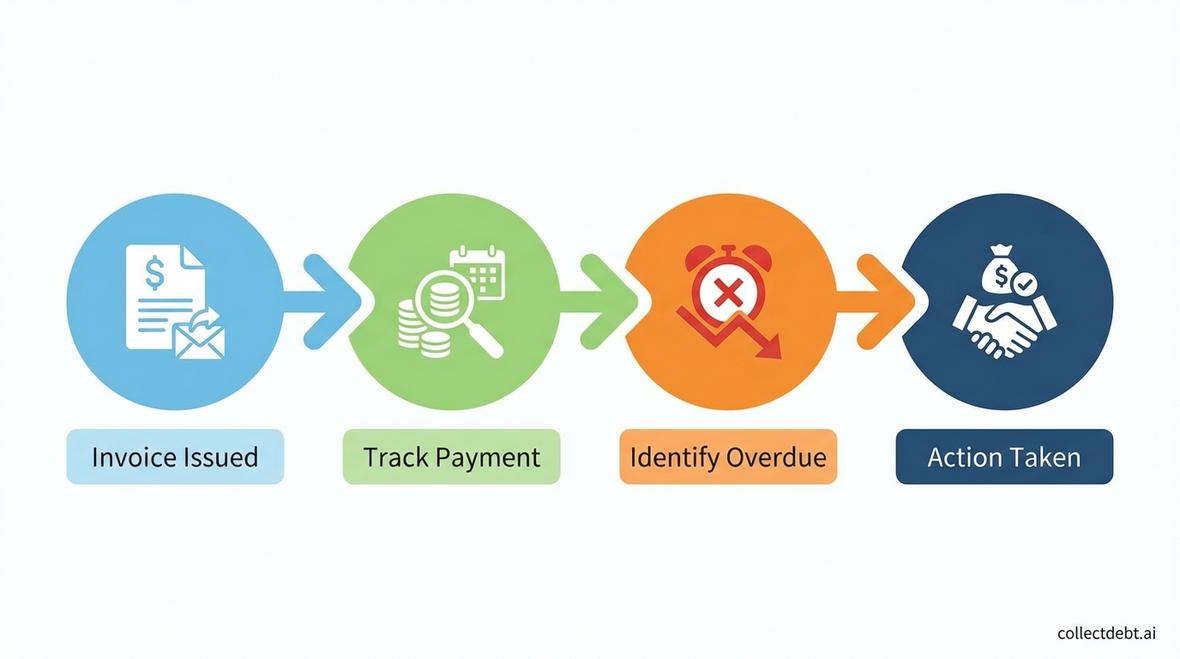
Core Metrics in Account Receivable Analysis
Effective account receivable analysis relies on tracking specific key performance indicators that reveal the health and efficiency of your collections process. According to AR KPIs for cash flow and profitability optimization, tracking DSO, CEI, and ART enables better financial predictions, operational cost management, and faster sales-to-cash conversion.
Days Sales Outstanding (DSO)
Days Sales Outstanding represents the average number of days it takes to collect payment after a sale. The formula is: (Accounts Receivable / Total Credit Sales) × Number of Days. A lower DSO indicates faster collections and better cash flow. Industry benchmarks vary significantly professional services typically maintain 30-45 days, while construction and manufacturing may see 60-90 days depending on contract terms.
Collection Effectiveness Index (CEI)
CEI measures the efficiency of collection efforts over a specific period. The calculation is: [(Beginning Receivables + Credit Sales - Ending Receivables) / (Beginning Receivables + Credit Sales - Ending Current Receivables)] × 100. A score above 80% generally indicates effective collections, while scores below 60% suggest significant process improvements are needed.
Accounts Receivable Turnover Ratio (ART)
This ratio shows how many times receivables are collected during a period: Net Credit Sales / Average Accounts Receivable. Higher turnover ratios indicate efficient collection processes and shorter cash conversion cycles. Businesses should compare their ART against industry peers to identify competitive advantages or deficiencies in their collection operations.
Aging Bucket Analysis
Categorizing receivables by age (0-30, 31-60, 61-90, 90+ days) reveals collection patterns and problem accounts. Research from construction industry benchmarking shows that 90+ days AR in construction representing 8-15% of total receivables leads to $200K-$500K annual losses for a $10M firm, emphasizing the critical importance of early intervention on aging accounts.
Bad Debt Ratio
This metric tracks the percentage of receivables written off as uncollectible: (Bad Debt Expense / Total Credit Sales) × 100. According to industry data, construction firms typically experience bad debt write-offs of 2-5% of revenue, while other industries may see 0.5-2% depending on credit screening rigor and economic conditions.
Industry-Specific Benchmarks and Standards
Account receivable analysis must account for significant variations across industries. Understanding sector-specific benchmarks helps organizations set realistic targets and identify when performance deviates from norms.
Healthcare Industry Challenges
Healthcare providers face unique receivables challenges in 2026. Rising denial rates and longer AR cycles in healthcare reflect trends including stricter payer scrutiny and increased patient payment responsibility, which are driving higher write-offs and cash flow risks for providers. Organizations implementing healthcare-specific collection strategies are better positioned to navigate these complexities.
Construction and Financial Services
Construction companies typically maintain higher DSO due to project billing structures and retainage practices. Financial services firms, conversely, often achieve lower DSO but face higher bad debt ratios depending on lending standards. Financial service providers benefit from specialized receivables analysis that accounts for credit risk modeling and regulatory compliance requirements.
Retail and Utilities
Retail operations generally experience faster turnover with 15-30 day DSO, while utilities companies face regulated billing cycles that standardize collection timelines. Both sectors increasingly leverage automation to manage high-volume, lower-value transactions efficiently. Organizations in utilities and telecom and retail sectors are adopting AI-powered solutions to streamline their receivables processes.
Advanced Analytical Techniques
Beyond basic metrics, sophisticated account receivable analysis employs several advanced techniques to extract deeper insights from receivables data.
Customer Segmentation Analysis
Grouping customers by payment behavior, credit risk, and account size enables targeted collection strategies. High-value customers with occasional delays may warrant personalized outreach, while chronic late payers require automated escalation protocols. Segmentation also reveals concentration risk when a small number of customers represent a large portion of receivables, creating vulnerability if those accounts default.
Trend Analysis and Forecasting
Examining receivables metrics over time identifies seasonal patterns, deteriorating trends, or improvements from process changes. Forecasting models use historical payment patterns to predict future cash collections, enabling better liquidity planning. According to AR dashboard best practices, tracking monthly receivables trends, customer concentration, and current AR ratio helps assess collection health and revenue risk.
Roll-Rate Analysis
This technique tracks how receivables migrate between aging buckets over time. For example, if 30% of accounts in the 31-60 day bucket consistently roll into 61-90 days, this indicates specific intervention points where collection efforts should intensify. Roll-rate analysis helps optimize resource allocation and predict future bad debt exposure.
Technology and Automation in AR Analysis
The account receivable analysis landscape has been transformed by automation and artificial intelligence. The AR Software market growth from $2.36B in 2021 to $3.50B by 2025 reflects rising adoption of automation in AR processes, supporting efficiency gains for collections managers worldwide.
AI-Powered Collection Solutions
Modern AI debt collection platforms analyze receivables data in real-time, prioritizing accounts by likelihood to pay, optimal contact timing, and predicted response to different outreach strategies. These systems continuously learn from outcomes, refining their predictions and recommendations over time.
Automated Dashboards and Reporting
Real-time dashboards eliminate manual data compilation, presenting executives with up-to-the-minute views of critical AR metrics. Customizable alerts notify teams when thresholds are exceeded such as DSO exceeding targets or specific customers crossing aging milestones. This enables proactive intervention rather than reactive problem-solving.
Integration with ERP and CRM Systems
Effective account receivable analysis requires data from multiple systems. Modern solutions integrate with enterprise resource planning (ERP), customer relationship management (CRM), and accounting platforms to create unified views of customer interactions, payment history, and outstanding balances. Organizations exploring integration capabilities can streamline data flows and eliminate manual reconciliation.
Optimizing Collection Processes Through Analysis
Account receivable analysis identifies specific process improvements that accelerate collections and reduce bad debt exposure.
Early Intervention Strategies
Analysis revealing that accounts moving past 60 days rarely get collected suggests implementing aggressive intervention at 45 days. Early-out collection strategies leverage data insights to contact customers before accounts become severely delinquent, dramatically improving recovery rates while preserving customer relationships.
Payment Plan Optimization
Data analysis shows which payment plan structures achieve the highest completion rates for different customer segments. Offering promise to pay arrangements aligned with customer cash flow patterns such as aligning with payroll cycles or seasonal revenue significantly improves collection outcomes compared to rigid payment terms.
Dispute Resolution Efficiency
Tracking dispute resolution timelines reveals bottlenecks in internal processes. If invoice disputes consistently take 30+ days to resolve, this extends DSO and damages customer relationships. Analysis-driven process improvements such as dedicated dispute resolution teams or automated dispute tracking can dramatically reduce resolution times.
Risk Management Through AR Analysis
Proactive account receivable analysis serves as an early warning system for credit risk and potential losses.
Credit Limit Decisions
Regular analysis of payment patterns informs credit limit adjustments. Customers consistently paying early may warrant increased limits to support business growth, while those showing payment deterioration require reduced exposure. This dynamic credit management balances revenue growth with risk mitigation.
Industry and Customer Concentration Risk
Analysis revealing that 40% of receivables come from a single industry or customer creates significant risk if that sector experiences distress. Diversification strategies informed by concentration analysis protect businesses from catastrophic losses when individual customers or industries face challenges.
Economic Indicator Correlation
Sophisticated analysis correlates receivables performance with broader economic indicators unemployment rates, commodity prices, or interest rates to predict potential collection challenges. This enables proactive credit tightening before economic downturns materialize in increased defaults.
Best Practices for Implementing AR Analysis
Successfully implementing comprehensive account receivable analysis requires organizational commitment and systematic approaches.
Data Quality and Governance
Analysis is only as good as underlying data. Establish clear data entry standards, regular data cleansing procedures, and validation rules to ensure receivables information accurately reflects reality. Inconsistent customer naming, incorrect aging calculations, or unrecorded payments undermine analytical insights.
Cross-Functional Collaboration
Effective AR analysis requires input from sales (customer relationships), operations (delivery confirmation), and finance (payment processing). Regular cross-functional reviews of receivables data ensure all perspectives inform collection strategies and credit decisions.
Continuous Improvement Cycles
Establish regular review cycles monthly for tactical adjustments, quarterly for strategic assessments to evaluate whether analysis-driven changes are producing desired results. Track before-and-after metrics for process improvements to quantify impact and refine approaches.
Compliance and Regulatory Considerations
Account receivable analysis and collection activities must comply with various regulations depending on industry and jurisdiction.
Fair Debt Collection Practices Act
Organizations must ensure their analysis-driven collection strategies comply with consumer protection regulations. FDCPA compliance requirements govern communication timing, frequency, and content for consumer debt collection, requiring careful integration with automated collection systems.
Data Privacy and Security
Receivables data contains sensitive customer information subject to privacy regulations like GDPR, CCPA, and industry-specific requirements. Analysis platforms must incorporate appropriate security controls, access restrictions, and audit trails to protect this information and demonstrate compliance.
Future Trends in Account Receivable Analysis
The account receivable analysis field continues evolving as technology advances and business models change.
Predictive Analytics and Machine Learning
Next-generation systems will predict payment likelihood with increasing accuracy, enabling hyper-personalized collection strategies. Machine learning models will identify subtle patterns in payment behavior that human analysts miss, continuously improving prediction accuracy as they process more data.
Blockchain and Smart Contracts
Emerging technologies may automate significant portions of receivables management through self-executing payment contracts triggered by delivery confirmations or milestone achievements, reducing disputes and accelerating collections.
Real-Time Analysis
As systems become more integrated and processing power increases, account receivable analysis will shift from periodic reporting to continuous monitoring with instant alerts and automated responses to changing conditions.
Frequently Asked Questions
How often should account receivable analysis be performed?
Basic metrics like DSO and aging reports should be reviewed weekly, while comprehensive analysis including trend evaluation and customer segmentation should occur monthly. Strategic assessments examining policy effectiveness and industry benchmarking are typically conducted quarterly.
What are the most important metrics for small businesses?
Small businesses should prioritize Days Sales Outstanding, aging bucket distribution (particularly 90+ days), and bad debt ratio. These metrics provide essential insights without requiring sophisticated analytical capabilities, helping smaller organizations identify collection issues before they become critical.
How can businesses improve their AR analysis capabilities?
Start by establishing consistent data collection practices and implementing automated reporting tools. Invest in training for finance staff on analytical techniques, and consider specialized AR management solutions that provide advanced analytics and benchmarking capabilities.
What role does automation play in modern AR analysis?
Automation eliminates manual data compilation, enables real-time monitoring, and applies sophisticated algorithms that identify patterns human analysts might miss. AI-powered automation also frees collection teams to focus on relationship-building and complex cases rather than routine data analysis.
Conclusion
Account receivable analysis has evolved from basic aging reports to sophisticated, data-driven practices that fundamentally improve business financial performance. By implementing comprehensive analytical frameworks, tracking the right metrics, leveraging automation technology, and continuously refining collection strategies based on insights, organizations can significantly reduce DSO, minimize bad debt exposure, and optimize cash flow. As we move further into 2026, businesses that master account receivable analysis will gain competitive advantages through superior working capital management, enabling investment in growth opportunities while competitors struggle with cash constraints. The integration of AI-powered solutions and predictive analytics will continue transforming this critical financial function, making now the ideal time to strengthen your organization's analytical capabilities.
Ready to Transform Your Collections Process?
See how CollectDebt.ai can help you automate debt collection, reduce costs, and improve compliance.